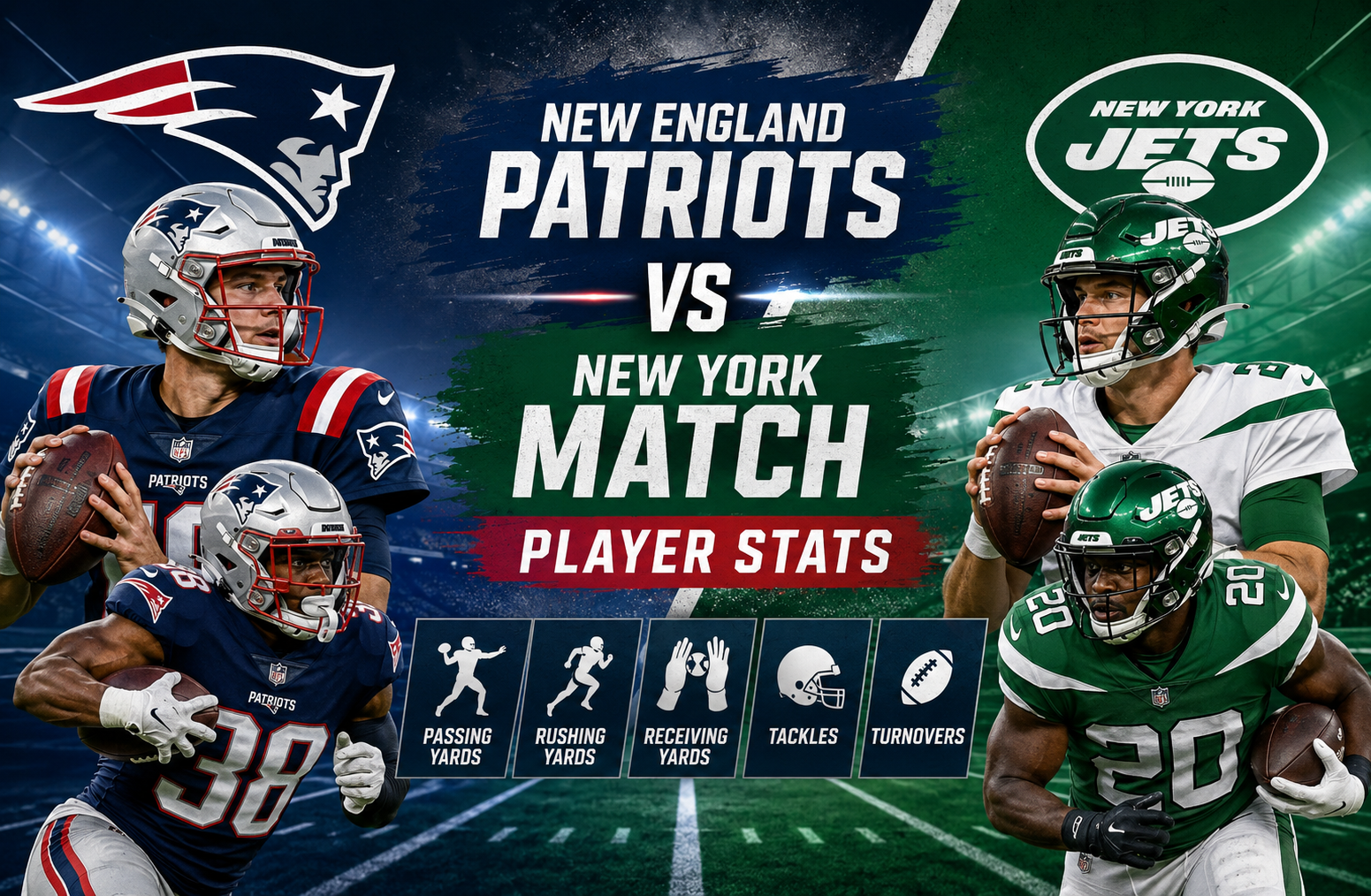
New England Patriots vs New York Match Player Stats
The rivalry behind New England Patriots vs New York Match Player Stats continues to attract NFL fans who want more than just a final score. Supporters, fantasy football players, analysts, and sports bettors all study player performances to understand how individual matchups shape the outcome of games between these franchises. Whether the contest involves the New York Jets or the New York Giants, the numbers often reveal tactical patterns, coaching adjustments, and breakout performances that casual viewers may miss.
For years, games involving the New England Patriots and New York teams have produced memorable quarterback duels, defensive stands, late game drives, and standout player statistics. Looking closely at passing yards, rushing efficiency, defensive pressure, red zone production, and turnover margins gives a much deeper understanding of why certain games swing in one direction.
This detailed guide breaks down the most important aspects of player performance analysis, explains what the statistics really mean, highlights notable historical trends, and shows how fans can interpret the data like experienced NFL analysts.
Why Player Stats Matter in NFL Rivalries
NFL games are rarely decided by one moment alone. Most outcomes are built through dozens of individual player contributions across offense, defense, and special teams. That is why New England Patriots vs New York Match Player Stats remain one of the most searched topics after every major meeting.
Player statistics help answer important questions such as:
- Which quarterback controlled the pace of the game
- Which defense created the most pressure
- Which receivers consistently won one on one matchups
- Which running backs extended drives
- Which players struggled under pressure
- How turnovers changed momentum
Statistics also help separate emotional reactions from factual performance analysis. A quarterback may throw for 300 yards but still struggle in red zone efficiency. A running back may record fewer carries but produce explosive plays that change field position.
Modern NFL analysis depends heavily on contextual statistics rather than raw totals alone.
Historical Context of Patriots vs New York Rivalries
The Patriots have shared decades of intense competition with New York franchises, particularly the Jets within the AFC East division. Meetings with the Giants have also gained national attention due to several unforgettable postseason battles.
Patriots vs Jets Rivalry
The Patriots and Jets rivalry intensified during the Tom Brady era. Division implications regularly placed additional pressure on these games, making player performances even more important.
Several statistical themes often appeared in these matchups:
- Strong Patriots passing efficiency
- Defensive pressure from New York front lines
- Low turnover games deciding close finishes
- Third down conversion battles
- Coaching adjustments after halftime
Quarterback play frequently determined outcomes. When New England protected the football and converted third downs effectively, they usually controlled possession and tempo.
Patriots vs Giants Matchups
Patriots versus Giants games became historically significant after multiple Super Bowl meetings. Those contests demonstrated how defensive pressure could disrupt even elite offenses.
Important statistical takeaways from those meetings included:
- Sack totals influencing quarterback rhythm
- Deep passing efficiency
- Fourth quarter execution
- Defensive back coverage ratings
- Time of possession management
The Giants often succeeded when their defensive line consistently pressured the quarterback without excessive blitzing.
Breaking Down Quarterback Performance
Quarterbacks remain the center of most NFL statistical analysis. In any discussion involving New England Patriots vs New York Match Player Stats, passing efficiency becomes one of the first areas analysts examine.
New England Patriots vs New York Match Player Stats and Quarterback Efficiency
Quarterback statistics go far beyond passing yards. Experienced analysts focus on advanced metrics that better reflect decision making and consistency.
Key quarterback metrics include:
Completion Percentage
A high completion percentage usually reflects:
- Accurate short passing
- Effective offensive design
- Good protection
- Smart decision making
However, completion percentage alone can sometimes be misleading if most throws are short screen passes.
Yards Per Attempt
This is one of the most valuable quarterback statistics. It measures how efficiently a quarterback moves the ball downfield.
A strong yards per attempt figure generally indicates:
- Aggressive vertical passing
- Explosive offensive plays
- Effective receiver separation
- Defensive breakdowns
Touchdown to Interception Ratio
Protecting the football remains critical in NFL games. Quarterbacks who limit interceptions while creating scoring opportunities consistently provide the highest value.
Quarterback Rating
Passer rating combines several passing categories into one metric. Although imperfect, it provides a quick overview of efficiency.
Elite quarterback performances often include:
- High third down conversion rates
- Low turnover numbers
- Strong red zone execution
- Efficient play action usage
Running Back Contributions Often Decide Physical Games
While quarterbacks receive most attention, running backs frequently determine the physical identity of these games.
Strong rushing performances help teams:
- Control clock management
- Reduce defensive pressure
- Open passing opportunities
- Improve red zone efficiency
- Wear down defensive fronts
Analysts now evaluate running backs using advanced metrics beyond total rushing yards.
Important Running Back Statistics
Yards After Contact
This measures toughness and balance. Running backs who continue gaining yardage after initial contact create hidden offensive value.
Explosive Run Percentage
Explosive plays dramatically shift momentum. Even a few long runs can alter defensive strategy.
Success Rate
This statistic evaluates whether a run helps the offense stay ahead of schedule based on down and distance.
A four yard run on third and three matters more than a seven yard run on third and fifteen.
Wide Receiver Matchups Shape Offensive Success
Receiver production remains central to evaluating New England Patriots vs New York Match Player Stats because modern NFL offenses depend heavily on passing attacks.
Wide receivers influence games through:
- Route running precision
- Separation ability
- Contested catches
- Red zone reliability
- Yards after catch
Key Receiver Metrics
Target Share
This shows how heavily a receiver is involved in the offensive game plan.
Catch Rate
Reliable receivers maintain strong catch percentages even under pressure.
Average Depth of Target
This reveals whether a receiver operates primarily in short, intermediate, or deep passing areas.
Yards After Catch
Receivers who create additional yardage after receptions often transform ordinary plays into explosive gains.
Tight Ends Continue to Influence Defensive Matchups
Tight ends create difficult matchup problems because they combine size with receiving ability.
Strong tight end play can:
- Exploit linebackers in coverage
- Create red zone advantages
- Improve third down conversion rates
- Support both passing and running attacks
Historically, New England has often used tight ends strategically to attack defensive weaknesses.
Defensive Statistics Often Reveal the True Story
Offensive highlights dominate television coverage, but defensive statistics frequently explain why games are won or lost.
Important defensive metrics include:
Sack Production
Quarterback pressure disrupts offensive timing and forces rushed decisions.
Tackles for Loss
Defenders who stop plays behind the line create negative offensive situations.
Interceptions
Turnovers remain among the strongest predictors of victory.
Pass Breakups
Defensive backs who consistently contest throws reduce offensive efficiency even without interceptions.
Pressure Rate
Modern analysis values consistent pressure even when sacks do not occur.
Defensive Line Battles Are Critical
Games involving New England and New York franchises often become trench battles.
Dominant defensive line performances can:
- Collapse pocket structure
- Eliminate rushing lanes
- Force quick throws
- Create turnover opportunities
- Disrupt offensive rhythm
Analysts increasingly focus on pass rush win rate instead of sack totals alone because pressure frequency matters greatly.
Offensive Line Statistics Are Frequently Overlooked
Offensive linemen rarely receive public attention despite their massive influence on player performance.
Strong offensive line play contributes to:
- Better quarterback protection
- More consistent rushing lanes
- Reduced penalties
- Improved red zone efficiency
- Longer developing pass plays
Key offensive line metrics include:
- Pressure allowed
- Sack responsibility
- Run block win rate
- Penalty frequency
Teams with dominant offensive line performances usually control game tempo more effectively.
Third Down Efficiency Separates Winning Teams
Third down performance often determines whether drives continue or end.
Successful teams generally:
- Maintain manageable third downs
- Convert short yardage situations
- Avoid penalties
- Execute quickly against defensive pressure
Analysts often consider third down conversion rate one of the clearest indicators of offensive consistency.
Red Zone Execution Changes Outcomes
Teams can move the ball effectively between the twenties yet still struggle to score touchdowns.
Red zone statistics measure:
- Touchdown conversion percentage
- Goal line efficiency
- Quarterback decision making
- Play calling creativity
Defensive red zone performance matters equally.
Strong defenses force:
- Field goal attempts
- Negative plays
- Turnovers
- Incomplete passes
Turnovers Remain the Most Important Swing Factor
Many NFL games become statistically predictable based on turnover margin alone.
Turnovers impact:
- Field position
- Momentum
- Time of possession
- Scoring opportunities
- Defensive fatigue
Teams that protect the football while forcing mistakes generally maintain significant winning advantages.
According to research published by the NFL Football Operations analytics section, turnover differential consistently ranks among the strongest indicators of game outcomes across multiple seasons.
Coaching Adjustments Influence Player Statistics
Statistics do not exist independently from coaching strategy.
Coaches influence player production through:
- Formation changes
- Defensive schemes
- Tempo adjustments
- Personnel rotations
- Situational play calling
Halftime adjustments frequently explain major statistical swings between first and second halves.
Experienced coaching staffs identify weaknesses quickly and redesign game plans accordingly.
How Advanced Analytics Changed NFL Evaluation
Modern NFL analysis extends far beyond traditional box scores.
Advanced analytics now include:
Expected Points Added
This metric evaluates how much value each play contributes toward scoring potential.
Win Probability
Analysts track how individual plays change a team’s chance of victory.
Completion Probability
This estimates how difficult certain passes are based on coverage and throw location.
Separation Metrics
Receiver tracking technology now measures how effectively players create space.
These tools provide deeper understanding than traditional statistics alone.
Fantasy Football Players Closely Track Match Stats
The fantasy football has dramatically increased interest in player level analysis.
Fantasy managers study:
- Snap counts
- Target volume
- Goal line usage
- Injury reports
- Matchup advantages
A receiver with modest yardage may still hold major fantasy value due to consistent red zone targets.
Similarly, running backs with high touch volume remain valuable even without explosive plays.
Common Patterns Seen in Patriots vs New York Games
Over the years, several recurring trends have emerged.
Defensive Pressure Often Determines Outcomes
Games frequently swing based on which defensive front generates more pressure.
Ball Control Offenses Limit Mistakes
Teams controlling possession usually reduce opponent opportunities.
Special Teams Plays Create Momentum
Field position remains extremely important in close games.
Veteran Quarterbacks Handle Pressure Better
Experienced quarterbacks generally perform more efficiently in late game situations.
What Fans Often Misunderstand About Player Stats
Many casual viewers focus only on touchdowns and total yardage. However, context matters greatly.
For example:
- A quarterback may throw short passes all game with limited impact
- A receiver may have fewer catches but dominate key third downs
- A defender may record no sacks while consistently collapsing the pocket
- A running back may create critical clock control late in games
Statistics become valuable only when interpreted within game context.
The Role of Injuries in Statistical Performance
Injuries heavily influence player production and team strategy.
Even minor injuries can affect:
- Throwing mechanics
- Acceleration
- Route separation
- Defensive coverage ability
- Endurance
Depth players often become unexpectedly important during physically demanding stretches of the season.
Smart analysts always evaluate injury context before comparing statistical performances.
Weather Conditions Can Alter Match Statistics
Cold weather, wind, and rain frequently affect games involving northeastern franchises.
Weather impacts:
- Passing accuracy
- Ball security
- Kicking reliability
- Receiver footing
- Defensive tackling
Strong rushing teams usually gain additional value during difficult weather conditions.
Rookie Performances Often Shape Future Rivalries
Young players frequently announce themselves in major rivalry games.
Strong rookie performances can:
- Change depth chart positions
- Build fan confidence
- Influence coaching decisions
- Create future star narratives
Analysts closely watch rookie snap counts and situational usage patterns during important matchups.
Special Teams Statistics Deserve More Attention
Special teams often receive minimal coverage despite their massive impact.
Important special teams metrics include:
- Punt return average
- Kickoff field position
- Field goal percentage
- Net punting average
- Coverage efficiency
One explosive return can completely shift momentum in a close contest.
How Analysts Prepare Match Player Reports
Professional analysts combine several evaluation methods.
These include:
- Film study
- Statistical review
- Injury tracking
- Coaching tendencies
- Personnel matchups
Film analysis remains critical because raw statistics cannot fully explain player execution.
For example, a receiver may record low production due to strong coverage rather than poor performance.
Predictive Trends Analysts Watch Before Games
Before matchups involving New England and New York teams, analysts monitor:
- Recent quarterback efficiency
- Defensive injury reports
- Offensive line health
- Turnover trends
- Third down success rates
- Red zone performance
These categories often provide better predictive value than win loss records alone.
Why Fans Search for Match Player Stats Immediately After Games
Modern sports culture revolves around instant analysis.
Fans search player statistics to:
- Validate observations
- Debate performances
- Analyze coaching decisions
- Track fantasy football outcomes
- Understand turning points
Social media has accelerated demand for detailed postgame analysis within minutes of final whistles.
The Future of NFL Statistical Analysis
NFL analytics continue evolving rapidly.
Future developments may include:
- Real time fatigue tracking
- AI powered matchup predictions
- Biometric performance analysis
- Advanced route efficiency models
- Enhanced defensive positioning data
Teams investing heavily in analytics departments may gain competitive advantages in roster building and in game strategy.
FAQs
What does New England Patriots vs New York Match Player Stats usually include?
It generally includes passing yards, rushing totals, receiving statistics, tackles, sacks, interceptions, turnovers, and advanced efficiency metrics from the game.
Why are quarterback stats so important in NFL analysis?
Quarterbacks influence offensive rhythm, scoring opportunities, turnovers, and overall efficiency more than any other position.
Which defensive statistics matter most in rivalry games?
Pressure rate, sacks, interceptions, and third down stops are often the most influential defensive categories.
How do analysts evaluate running back performance beyond rushing yards?
They examine yards after contact, explosive runs, success rate, pass protection, and red zone efficiency.
Why do advanced analytics matter in football?
Advanced analytics provide deeper context by measuring efficiency, probability, and situational impact instead of only raw totals.
Can weather significantly affect player statistics?
Yes. Wind, rain, and cold temperatures often reduce passing efficiency and increase emphasis on rushing attacks.
Conclusion
Studying New England Patriots vs New York Match Player Stats provides a far deeper understanding of NFL competition than simply checking final scores. Individual performances, tactical adjustments, defensive pressure, and situational efficiency all contribute to the outcome of these high profile matchups.
Quarterbacks may dominate headlines, but offensive linemen, defensive backs, running backs, and special teams units frequently determine momentum in crucial moments. Advanced analytics now allow fans to interpret games with greater sophistication, revealing details that traditional box scores often miss.
As NFL analysis continues evolving, player statistics will remain one of the most valuable tools for understanding performance, predicting trends, and appreciating the strategic complexity behind every game.