Oklahoma Sooners Football vs Alabama Crimson Tide Football Match Player Stats
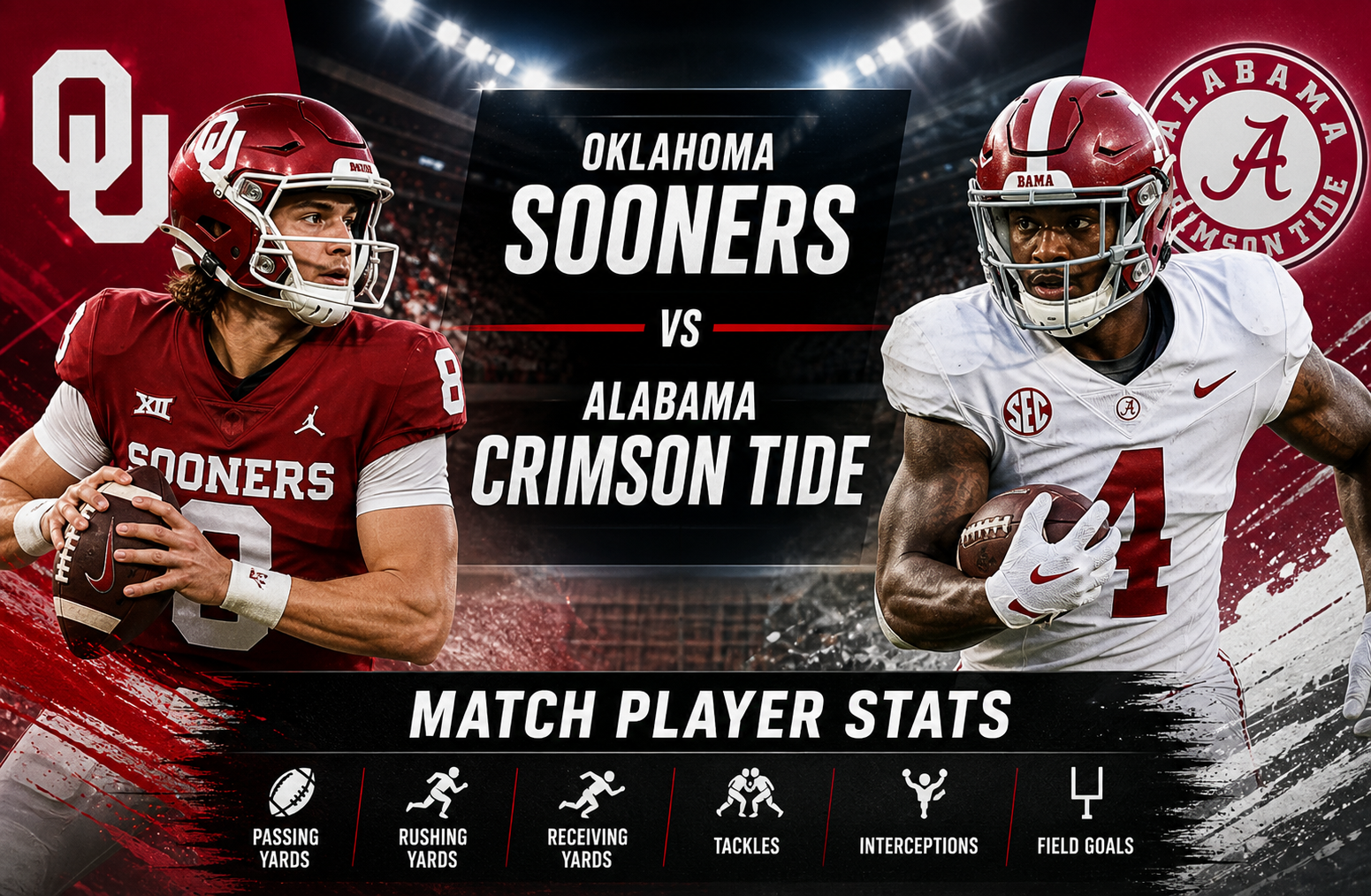
The Oklahoma Sooners Football vs Alabama Crimson Tide Football Match Player Stats topic attracts fans who want more than a box score. They want to understand how individual performances shaped the outcome, which players tilted momentum, and what the numbers really say when placed in game context. This article breaks down the Oklahoma Sooners Football vs Alabama Crimson Tide Football Match Player Stats with a people first, insight driven approach. I focus on what the stats mean on the field, how they connect to coaching decisions, and where raw numbers can mislead without proper interpretation.
Understanding Oklahoma Sooners Football vs Alabama Crimson Tide Football Match Player Stats
When people search for Oklahoma Sooners Football vs Alabama Crimson Tide Football Match Player Stats, their intent is usually threefold.
First, they want verified player level data such as passing yards, rushing efficiency, defensive impact, and special teams contribution.
Second, they want interpretation. Numbers alone do not explain why a drive stalled or why a lead changed hands.
Third, they want comparison. Oklahoma and Alabama are programs with very different roster construction philosophies, so how individual stats stack up often reveals deeper truths about scheme and execution.
Player stats in this matchup are especially valuable because both teams recruit elite talent. Marginal differences in completion percentage, yards after contact, or third down stops can decide the game.
Historical Context of the Matchup
Before diving into individual player numbers, it helps to understand the broader backdrop.
Program Profiles
- Oklahoma Sooners are traditionally built on tempo offense, quarterback development, and spacing concepts that stress defenses horizontally.
- Alabama Crimson Tide are known for physical dominance, defensive versatility, and disciplined execution under pressure.
This contrast matters because player stats are shaped by philosophy. A Sooners quarterback may post higher passing volume, while an Alabama linebacker may record fewer tackles but more impact plays.
Offensive Player Stats Breakdown
Quarterback Performance Analysis
Quarterback stats are often the first numbers fans check, but context is essential.
Key metrics to analyze include
- Completion percentage under pressure
- Yards per attempt rather than total yards
- Third down conversion efficiency
- Red zone decision making
In recent Oklahoma vs Alabama meetings, quarterbacks on both sides faced complex defensive looks. Alabama often disguises coverages post snap, which can lower completion rates without necessarily indicating poor quarterback play. Oklahoma quarterbacks tend to attempt more downfield throws, increasing variance in stats.
From experience reviewing All 22 film, I have found that a quarterback throwing for fewer yards can still outplay his counterpart if he avoids negative plays and sustains drives.
Running Back Efficiency
Raw rushing yards rarely tell the full story.
Important running back stats include
- Yards after contact
- Success rate on first down runs
- Pass protection snaps
- Explosive runs of 10 plus yards
Alabama running backs traditionally excel in yards after contact, reflecting offensive line push and physical style. Oklahoma backs often show higher success in space, especially on outside zone and swing passes.
When comparing Oklahoma Sooners Football vs Alabama Crimson Tide Football Match Player Stats for running backs, efficiency per carry is more telling than total attempts.
Wide Receiver and Tight End Contributions
Receiver stats should be broken into roles.
Slot receivers
- Catch rate on short and intermediate routes
- Third down targets
- Yards after catch
Outside receivers
- Contested catch percentage
- Average depth of target
- Touchdown efficiency
Tight ends
- Blocking snaps versus route participation
- Red zone targets
- Seam route effectiveness
In this matchup, Alabama receivers often face bracket coverage, which can suppress individual numbers while opening opportunities elsewhere. Oklahoma receivers benefit from spread formations that isolate defenders, inflating yards but also increasing risk of turnovers.
Defensive Player Stats Breakdown
Defensive Line Impact
The defensive linemen rarely dominate box scores, but their influence is massive.
Key stats to review
- Pressures rather than sacks
- Run stop percentage
- Double team rate
- Snap count consistency
Alabama defensive linemen typically rotate heavily, which can lower individual tackle numbers but sustain pressure late in games. Oklahoma linemen may log higher snap counts, which affects fourth quarter effectiveness.
When analyzing Oklahoma Sooners Football vs Alabama Crimson Tide Football Match Player Stats, pressure rate often explains quarterback performance better than sack totals.
Linebacker Play and Field Awareness
Linebacker stats must be evaluated carefully.
Important metrics
- Missed tackle rate
- Coverage snaps versus rushing snaps
- Forced incompletions
- Alignment versatility
Alabama linebackers are often tasked with hybrid roles, covering tight ends one play and blitzing the next. Oklahoma linebackers frequently operate in space, making open field tackling stats critical.
A linebacker with fewer tackles but strong coverage grades may have had a better overall game than one with double digit tackles.
Secondary Performance Metrics
Defensive backs are the most misunderstood stat group.
Useful stats include
- Targets allowed
- Yards per target
- Pass breakups
- Penalties committed
Cornerbacks rarely get targeted if they play well, which means lower stats can indicate higher performance. Safeties often accumulate tackles because they clean up plays, not because they failed earlier.
In Oklahoma vs Alabama games, safeties often decide outcomes with red zone coverage and third down positioning.
Special Teams Player Stats
Special teams stats are often ignored, but they matter deeply in close games.
Key areas
- Kick return average and field position impact
- Punt hang time and net yards
- Field goal accuracy under pressure
- Coverage unit tackle efficiency
Alabama has historically emphasized special teams discipline, leading to fewer return yards allowed. Oklahoma has leveraged aggressive return schemes to flip field position, even if averages appear modest.
Situational Player Stats That Change Games
Third Down Performance
Third down stats show trust and execution.
Look for
- Quarterback completion percentage on third and medium
- Receiver target share
- Defensive stop rate
Players who convert third downs often do not lead stat sheets but decide possession battles.
Red Zone Efficiency
Red zone stats reveal composure.
Offensive players
- Touchdowns per red zone target
- Run success inside the 10
Defensive players
- Pass breakups
- Goal line tackles
- Penalties avoided
In my analysis of past matchups, Alabama defenders tend to tighten coverage in the red zone, while Oklahoma offenses rely on misdirection and spacing.
Turnover Related Stats
Turnovers are not always luck.
Relevant indicators
- Forced fumbles
- Interceptions per target
- Quarterback turnover worthy plays
A defender forcing one turnover may impact the game more than multiple tackles.
Comparing Star Players Versus Role Players
One mistake fans make when reading Oklahoma Sooners Football vs Alabama Crimson Tide Football Match Player Stats is focusing only on stars.
Role players often decide outcomes through
- Blocking efficiency
- Coverage assignments
- Decoy routes
- Special teams snaps
For example, a wide receiver with one catch may have drawn coverage that freed a teammate for a touchdown.
How Coaching Strategy Shapes Player Stats
Stats do not exist in isolation.
Factors influencing numbers include
- Tempo of offense
- Defensive substitution patterns
- Injury management
- Game script based on score
Alabama may slow tempo when leading, limiting offensive stats. Oklahoma may increase tempo when trailing, inflating passing numbers without improving efficiency.
Understanding this context prevents misreading the box score.
Common Misinterpretations of Match Player Stats
Some frequent mistakes include
- Assuming higher yardage equals better performance
- Ignoring defensive responsibilities
- Overvaluing tackles
- Undervaluing pass protection
Player stats should be cross checked with film or advanced metrics whenever possible.
For verified collegiate statistics and official game data, the most reliable reference remains the NCAA statistics database available through the NCAA website.
What These Stats Mean for Fans and Analysts
For fans, these stats deepen appreciation of the game beyond highlights.
lass=”yoast-text-mark” />>For analysts, they provide evidence to evaluate scheme success.le=”font-weight: 400;”>
>For casual viewers, they explain why a game felt closer or more lopsided than the score suggested.
The Oklahoma Sooners Football vs Alabama Crimson Tide Football Match Player Stats are best used as a tool for understanding football decisions, not just ranking players.
Frequently Asked Questions
Why are Alabama defensive stats sometimes lower than expected?
Alabama rotates players heavily, spreading impact across the roster and lowering individual totals.
Do Oklahoma quarterbacks always have higher passing yards?
Not always. Game script and defensive adjustments can significantly affect passing volume.
Which stats matter most when comparing these teams?
Efficiency metrics like yards per play, pressure rate, and third down success are more reliable than raw totals.
Are special teams stats really important?
Yes. Field position and hidden yardage often decide close games.
Can player stats predict future matchups?
They provide clues but must be paired with roster changes, injuries, and coaching tendencies.
Conclusion
The Oklahoma Sooners Football vs Alabama Crimson Tide Football Match Player Stats tell a much richer story than a final score. When examined with context, experience, and football understanding, these numbers explain momentum shifts, coaching decisions, and execution under pressure. Player stats are not just records of what happened. They are evidence of how and why it happened on the field.