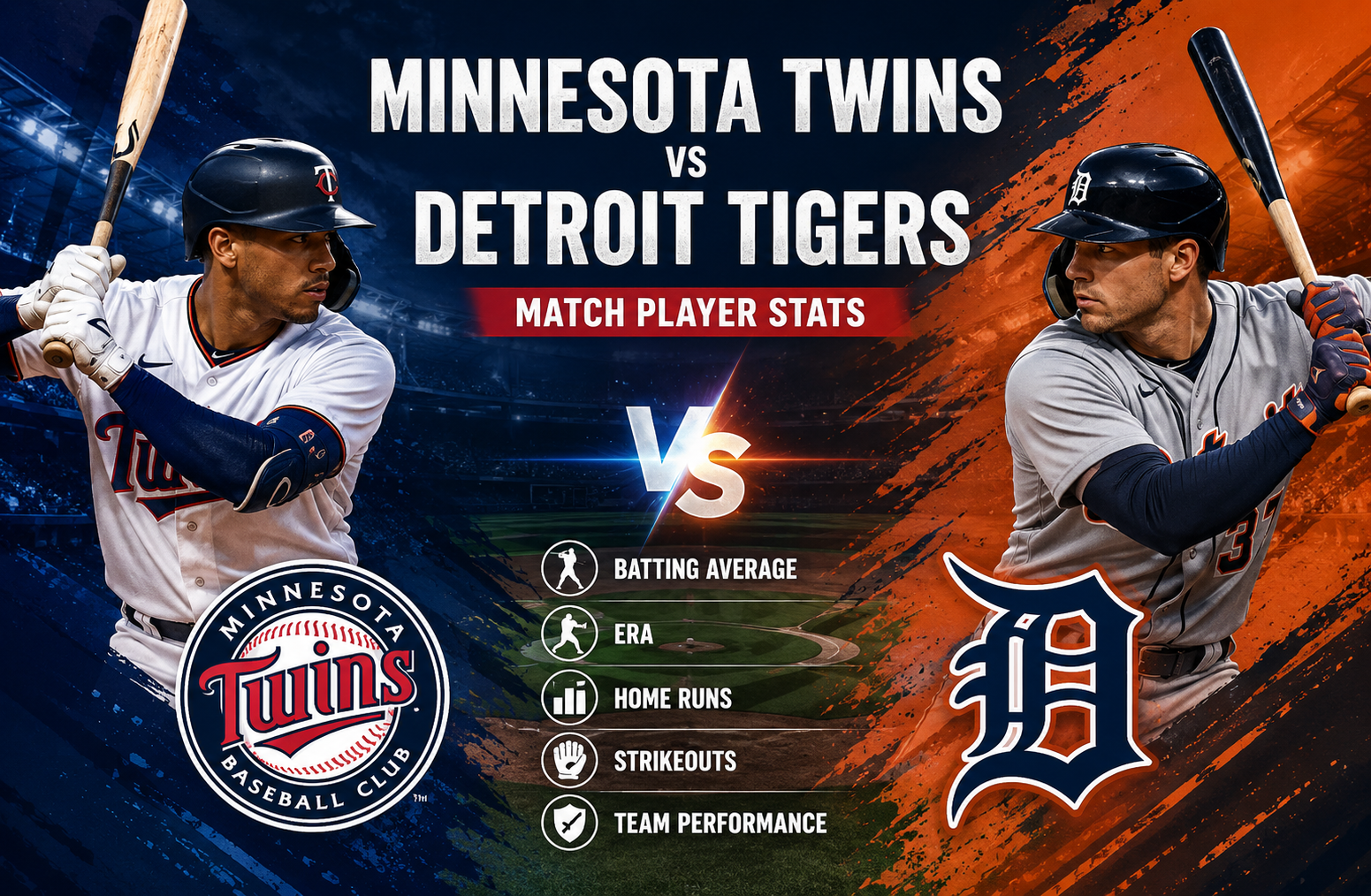
Minnesota Twins vs Detroit Tigers Match Player Stats
The keyword Minnesota Twins vs Detroit Tigers Match Player Stats continues to attract baseball fans who want more than a simple box score. Supporters of both teams often search for deeper insights that explain why certain players dominate specific matchups, how pitching rotations influence outcomes, and which statistics actually matter when evaluating performance.
The rivalry between the Minnesota Twins and the Detroit Tigers may not receive the same national spotlight as some coastal franchises, but it consistently delivers competitive games, breakout performances, and meaningful American League Central implications. Over the years, this matchup has featured elite pitching duels, explosive batting displays, and several underrated individual performances that deserve closer attention.
When analyzing Minnesota Twins vs Detroit Tigers Match Player Stats, raw numbers alone rarely tell the complete story. Context matters. Ballpark conditions, bullpen depth, defensive efficiency, lineup balance, and recent form all influence how players perform in these meetings. Fans who understand those details gain a much clearer picture of why games unfold the way they do.
This article provides a complete statistical and tactical breakdown of the matchup. Instead of recycling surface level numbers, the focus here is on meaningful analysis, player impact, matchup trends, and real baseball insight that helps readers better understand the rivalry.
Understanding the Importance of Match Player Statistics
Baseball is one of the most statistics driven sports in the world. Every pitch, hit, strikeout, and defensive play contributes to a broader analytical picture. Match specific statistics become even more valuable because they reveal how players perform against certain opponents rather than across an entire season.
For Minnesota and Detroit games, player stats often highlight patterns such as:
- Certain hitters excelling against left handed pitching
- Pitchers struggling in hitter friendly conditions
- Bullpen reliability during close divisional games
- Defensive efficiency under pressure
- Clutch hitting in late innings
Fans who examine these details gain insights that casual viewers often miss.
Historical Context of the Rivalry
The Twins and Tigers have shared the American League Central for decades. Their meetings regularly affect division standings, playoff hopes, and player momentum throughout the season.
Historically, several themes have defined this rivalry:
Strong Pitching Performances
Both organizations have produced elite pitchers over different eras. Detroit has traditionally relied on power pitching, while Minnesota has often balanced contact management with disciplined bullpen usage.
Momentum Swings
This matchup frequently produces momentum shifts during long series. One explosive inning or bullpen collapse can change an entire series outcome.
Young Talent Development
Both franchises have invested heavily in developing young talent. Many fans watch these games closely to evaluate prospects and emerging stars.
According to official MLB historical records available through Major League Baseball Stats, divisional games consistently produce tighter scoring margins than many interleague matchups, making individual player performance even more important.
Key Offensive Metrics That Matter
When reviewing Minnesota Twins vs Detroit Tigers Match Player Stats, several offensive categories provide meaningful insight.
Batting Average
Batting average remains one of the easiest statistics for casual fans to understand. It measures how frequently a player records a hit.
However, batting average alone can sometimes be misleading because it ignores walks and extra base impact.
On Base Percentage
On base percentage is often more valuable because it reflects how consistently a player avoids making outs.
Players with strong on base percentages create pressure on pitchers and increase scoring opportunities for teammates.
Slugging Percentage
Slugging percentage highlights power production. Extra base hits matter significantly in divisional matchups where pitching quality is usually higher.
A player with fewer hits but more doubles and home runs may provide greater offensive value than a contact hitter with mostly singles.
OPS
OPS combines on base percentage and slugging percentage into one simplified metric.
Analysts frequently use OPS to identify complete offensive contributors.
RBI Production
Runs batted in remain important in close games. Certain players consistently perform better with runners in scoring position.
That clutch factor often becomes visible in divisional series.
Minnesota Twins Offensive Standouts
The Twins lineup traditionally emphasizes balance rather than relying on a single superstar.
Several offensive characteristics usually define Minnesota:
Plate Discipline
Minnesota hitters often work deeper counts and force pitchers into difficult situations.
This approach creates:
- Higher pitch counts
- Earlier bullpen appearances
- More walk opportunities
- Increased scoring pressure late in games
Power Through the Middle Order
The middle of the lineup typically generates strong home run numbers.
Against Detroit pitching, Twins power hitters often focus on:
- Fastball timing
- Pull side power
- Punishing mistakes over the plate
Situational Hitting
Minnesota frequently performs well in sacrifice situations and productive outs.
That style becomes valuable during low scoring divisional contests.
Detroit Tigers Offensive Identity
Detroit has undergone several roster transitions in recent years, but the organization continues building around athleticism and emerging hitters.
Contact Focus
Many Tigers hitters prioritize contact quality over pure power.
This creates:
- Fewer strikeouts
- More pressure on defenses
- Better situational adaptability
Speed on the Bases
Aggressive base running can disrupt pitchers and create scoring opportunities.
Against Minnesota, Detroit often attempts to manufacture runs through:
- Stolen bases
- Hit and run plays
- First to third advancement
Young Core Development
One interesting aspect of Minnesota Twins vs Detroit Tigers Match Player Stats is watching younger players develop confidence in meaningful divisional games.
Young hitters often gain valuable experience facing pressure situations repeatedly against familiar opponents.
Pitching Matchup Analysis
Pitching usually determines the outcome of these games more than offense.
Starting Pitching Importance
Strong starting pitching provides:
- Bullpen preservation
- Defensive stability
- Momentum control
- Reduced scoring pressure
When evaluating starters, important metrics include:
- ERA
- WHIP
- Strikeout rate
- Walk percentage
- Ground ball rate
Bullpen Reliability
Modern baseball places enormous pressure on relievers.
Late inning bullpen execution frequently decides Twins and Tigers games.
Reliable relievers help teams:
- Protect narrow leads
- Escape high leverage situations
- Neutralize dangerous hitters
Pitch Arsenal Matchups
Different lineups respond differently to pitch types.
For example:
- Some hitters struggle against sliders
- Others dominate fastballs
- Certain batters excel against left handed pitching
That tactical layer makes baseball analysis more sophisticated than simple batting averages.
Defensive Statistics Often Overlooked
Many fans focus heavily on offense, but defense plays a critical role in divisional games.
Fielding Percentage
Fielding percentage measures defensive reliability, although it does not capture range.
Defensive Runs Saved
Advanced analytics now evaluate how many runs defenders prevent through positioning and athleticism.
Catcher Framing
Elite catchers can influence umpire strike zones and improve pitching efficiency.
Outfield Arm Strength
Strong outfield defense prevents runners from taking extra bases.
In close games, one defensive stop can completely change momentum.
Head to Head Statistical Trends
Several recurring patterns often appear in Minnesota Twins vs Detroit Tigers Match Player Stats.
Low Scoring Games
Divisional familiarity often benefits pitchers because they repeatedly face the same hitters.
Bullpen Heavy Outcomes
Managers tend to make aggressive bullpen decisions in close AL Central matchups.
Increased Strikeout Rates
Pitchers who understand hitter tendencies gain strategic advantages over time.
Home Field Influence
Ballpark conditions matter significantly.
Factors include:
- Wind direction
- Field dimensions
- Crowd energy
- Turf conditions
Impact Players Who Shape the Matchup
Every rivalry develops players who consistently influence outcomes.
Power Hitters
Certain sluggers routinely change games with one swing.
These players impact:
- Pitch sequencing
- Defensive positioning
- Bullpen usage
Ace Pitchers
Elite starters can dominate entire series momentum.
Strong pitching performances often:
- Save bullpen arms
- Increase team confidence
- Pressure opposing offenses
Defensive Leaders
Some players contribute more through defense than offensive production.
Those contributions may not always appear in highlight packages, but they matter deeply in tight games.
Advanced Analytics and Modern Baseball Evaluation
Modern baseball analysis extends far beyond traditional statistics.
Exit Velocity
Exit velocity measures how hard a player hits the baseball.
Higher exit velocities generally correlate with better offensive outcomes.
Launch Angle
Launch angle helps analysts understand hitting mechanics and power generation.
Expected Batting Average
Expected metrics estimate what should happen based on contact quality.
This helps identify:
- Unlucky hitters
- Overperforming players
- Sustainable production
Spin Rate
Pitch spin influences movement and deception.
High spin fastballs and breaking balls often generate more swings and misses.
Why Fans Search for Match Player Stats
Baseball fans no longer consume sports passively.
Modern audiences want:
- Tactical understanding
- Fantasy baseball insights
- Betting analysis
- Player development evaluation
- Deeper game appreciation
Minnesota Twins vs Detroit Tigers Match Player Stats help satisfy that curiosity by providing measurable performance indicators.
Real Game Situations That Change Statistical Outcomes
Statistics must always be interpreted with context.
Weather Conditions
Cold weather can suppress offense.
Wind patterns may influence:
- Home run distance
- Fly ball carry
- Pitch movement
Travel Fatigue
Long road trips can affect:
- Hitting timing
- Defensive sharpness
- Bullpen stamina
Injury Management
Players returning from injury may perform differently than season averages suggest.
Doubleheaders
Roster management becomes especially important during condensed schedules.
Tactical Strategies Used in the Matchup
Managers approach divisional games differently because familiarity increases tactical complexity.
Defensive Shifts
Although MLB shift restrictions changed defensive alignment rules, teams still strategically position defenders.
Bullpen Matchups
Managers frequently deploy relievers based on:
- Handedness
- Strikeout ability
- Ground ball tendencies
Pinch Hitting Decisions
Bench depth can influence late inning outcomes.
Aggressive Base Running
Close games sometimes require manufacturing runs rather than waiting for home runs.
Comparing Offensive Production
Minnesota and Detroit often display contrasting offensive philosophies.
| Category | Minnesota Twins | Detroit Tigers |
| Power Potential | Higher home run emphasis | Balanced contact approach |
| Plate Discipline | Strong walk rates | Contact focused |
| Base Running | Moderate aggression | More aggressive |
| Situational Hitting | Structured approach | Adaptable approach |
These stylistic differences create fascinating tactical battles.
Statistical Categories Fans Should Prioritize
Not every statistic provides equal value.
The most meaningful categories usually include:
- OPS
- WHIP
- Strikeout to walk ratio
- On base percentage
- Defensive efficiency
- Bullpen ERA
- Clutch hitting metrics
Fans focusing only on batting average may miss critical performance details.
Fantasy Baseball Perspective
Fantasy baseball players closely monitor divisional matchups.
Important considerations include:
- Pitcher versus hitter history
- Ballpark factors
- Injury reports
- Bullpen fatigue
- Weather conditions
Certain players consistently outperform expectations against familiar divisional opponents.
Media and Fan Reactions
One interesting aspect of this rivalry is how fan expectations shift quickly based on recent performances.
A player who struggles for weeks can suddenly dominate a divisional series and change public perception immediately.
Baseball remains highly momentum driven emotionally, even if analytics suggest longer evaluation periods.
What Makes This Matchup Interesting
Several factors make Twins versus Tigers games compelling:
Familiarity
Players repeatedly face each other, creating tactical chess matches.
Division Stakes
Even regular season games can influence playoff positioning.
Emerging Talent
Young prospects often gain attention during these contests.
Strategic Baseball
Managers frequently manage these games aggressively due to divisional importance.
Challenges in Evaluating Match Player Stats
Statistics can sometimes mislead readers without proper interpretation.
Small Sample Sizes
One strong series does not always indicate long term dominance.
Context Dependency
Performance changes depending on:
- Opponent quality
- Venue
- Weather
- Lineup protection
Evolving Analytics
New metrics constantly reshape player evaluation methods.
Fans should remain open to modern analytical approaches while still appreciating traditional baseball knowledge.
How Analysts Study These Games
Professional analysts often combine:
- Video review
- Data analytics
- Pitch tracking
- Defensive positioning analysis
- Situational performance breakdowns
This multi layered approach provides more accurate conclusions than isolated numbers.
The Human Side of Baseball Statistics
Statistics are valuable, but baseball remains deeply human.
Confidence, pressure, chemistry, and momentum influence outcomes in ways numbers cannot fully capture.
Experienced fans recognize:
- Emotional momentum swings
- Crowd influence
- Rivalry intensity
- Leadership impact
That emotional layer is part of what makes baseball compelling.
Future Outlook for Both Teams
The future of this rivalry looks promising because both franchises continue investing in young talent and roster development.
Minnesota Outlook
The Twins continue emphasizing:
- Offensive depth
- Versatile pitching
- Analytical development
Detroit Outlook
Detroit appears focused on:
- Young pitching growth
- Athletic defense
- Long term roster stability
As these rosters evolve, future statistical battles may become even more competitive.
Frequently Asked Questions
What are the most important Minnesota Twins vs Detroit Tigers Match Player Stats?
The most valuable statistics usually include OPS, ERA, WHIP, strikeout rate, bullpen ERA, and situational hitting metrics.
Why do divisional matchups often produce lower scoring games?
Players and coaches become highly familiar with opposing tendencies, giving pitchers strategic advantages over hitters.
Which team traditionally relies more on power hitting?
Minnesota has generally emphasized power production more heavily, while Detroit often focuses on contact and athleticism.
How important is bullpen performance in this rivalry?
Bullpen execution is extremely important because many divisional games remain close into the late innings.
Are advanced analytics more useful than traditional statistics?
Both matter. Advanced analytics provide deeper context, while traditional stats remain useful for quick evaluation.
Why do fans closely follow player specific matchup history?
Some players consistently perform better or worse against certain pitchers or teams, creating meaningful tactical patterns.
Conclusion
Minnesota Twins vs Detroit Tigers Match Player Stats reveal far more than simple box score numbers. These statistics help explain tactical decisions, player development, momentum swings, and divisional competitiveness across the MLB season.
The rivalry continues evolving as both franchises develop young talent and refine their strategic identities. Minnesota often relies on disciplined offensive pressure and power production, while Detroit frequently emphasizes athleticism, contact quality, and defensive adaptability.
For fans, analysts, fantasy players, and dedicated baseball followers, studying these matchups provides a deeper appreciation for how modern baseball operates beyond surface level narratives. Understanding advanced metrics, situational trends, and contextual performance creates a far richer viewing experience.