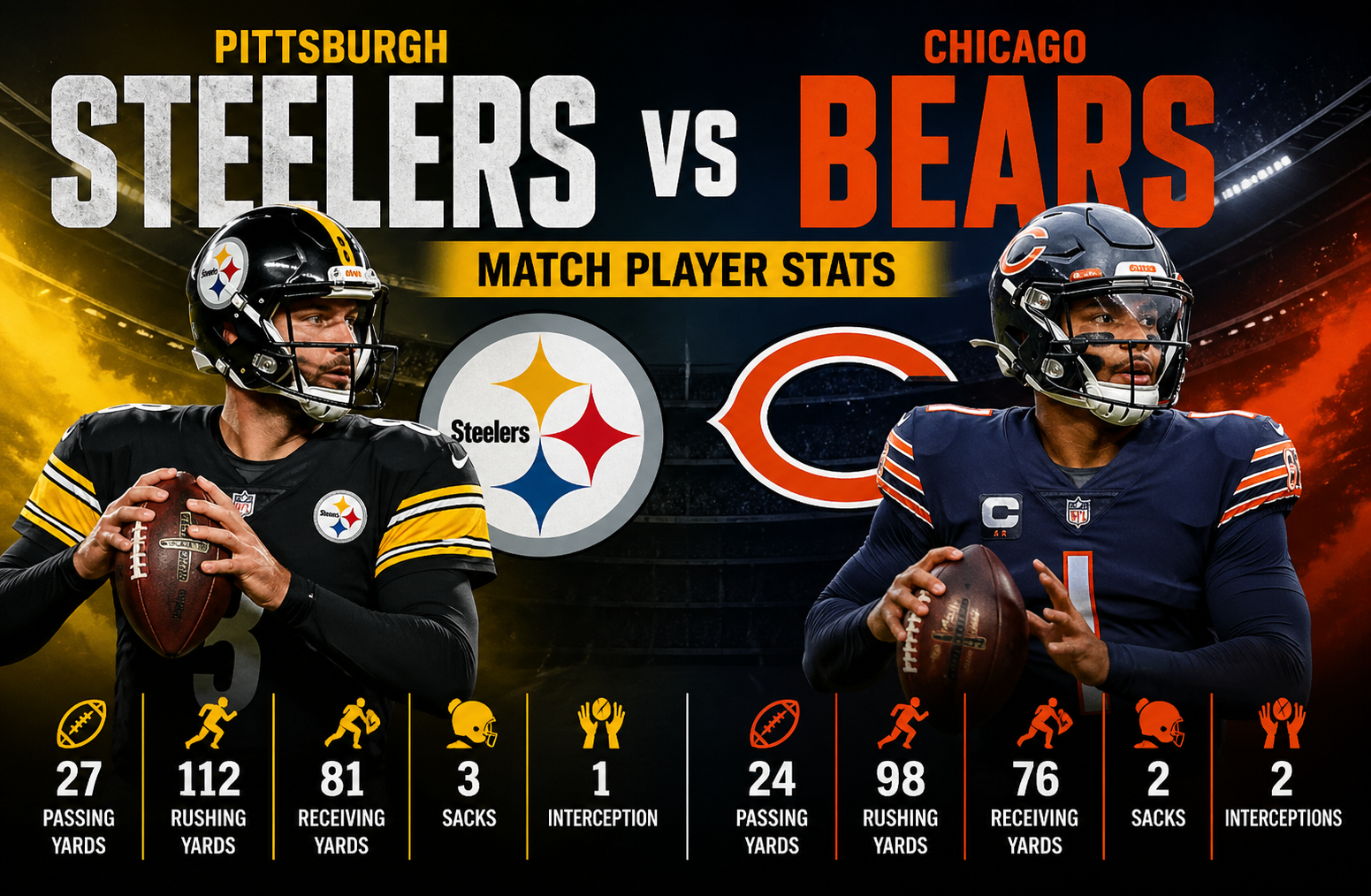
Pittsburgh Steelers vs Chicago Bears Match Player Stats
The Pittsburgh Steelers vs Chicago Bears Match Player Stats provide a detailed lens into one of the most historically rich matchups in the NFL. Fans, analysts, and bettors often look beyond the final score to understand how individual performances shaped the outcome. This article breaks down player statistics, tactical insights, and real-world interpretations to help you fully understand what these numbers truly mean.
Whether you are analyzing past matchups or preparing for future encounters, this guide goes deeper than surface-level stats. It explains how player contributions translate into team success and what patterns consistently emerge between these two franchises.
Understanding Match Player Stats in NFL Games
Before diving into specifics, it is important to understand what “match player stats” actually include and why they matter.
Core Statistical Categories
Player statistics in a game typically fall into these groups:
- Offensive stats
- Passing yards, touchdowns, interceptions
- Rushing yards and attempts
- Receiving yards, receptions, targets
- Defensive stats
- Tackles, sacks, interceptions
- Forced fumbles and recoveries
- Special teams
- Field goals, punt returns, kick returns
Each of these categories contributes to a broader narrative. Numbers alone do not tell the whole story, but when interpreted correctly, they reveal patterns of dominance, weaknesses, and strategic execution.
Historical Context of Steelers vs Bears Matchups
The Pittsburgh Steelers and Chicago Bears are two of the oldest and most respected franchises in NFL history. Their meetings are not just games; they are clashes of identity.
What Makes This Matchup Unique
- Both teams traditionally emphasize defensive strength
- Physical style of play defines their identity
- Games often feature low-scoring, high-impact moments
Historically, standout performances have often come from defensive players rather than flashy offensive stars. This makes analyzing player stats even more interesting, as impact is not always reflected in touchdowns alone.
Offensive Player Stats Breakdown
Quarterback Performance Analysis
Quarterbacks are usually the focal point of any statistical breakdown.
In recent Pittsburgh Steelers vs Chicago Bears Match Player Stats:
- Completion percentage often determines control of the game
- Turnovers play a decisive role in shifting momentum
For example:
- A Steelers quarterback may throw for 250+ yards but struggle with interceptions
- A Bears quarterback might have fewer yards but higher efficiency
Key Insight: Efficiency often outweighs volume in this matchup.
Running Back Contributions
Both teams historically rely on strong running games.
Typical trends include:
- Steelers backs focusing on consistent yardage gains
- Bears backs emphasizing explosive runs
Important metrics to analyze:
- Yards per carry
- Red zone efficiency
- Third-down conversions
A running back who gains 80 yards but converts multiple third downs can be more valuable than one with 120 yards and no situational impact.
Wide Receiver and Tight End Impact
Receiving stats in these matchups often reveal:
- Limited deep plays due to strong defenses
- Higher reliance on short and intermediate routes
Watch for:
- Target distribution among receivers
- Yards after catch
- Red zone receptions
Real-world observation: In several matchups, tight ends become crucial due to their ability to exploit defensive gaps.
Defensive Player Stats Breakdown
Tackles and Defensive Control
Defensive stats often define the outcome of Steelers vs Bears games.
Key indicators include:
- Total tackles
- Solo tackles vs assisted tackles
- Defensive stops on third down
High tackle counts from linebackers often indicate strong defensive control.
Sacks and Pressure Metrics
Quarterback pressure is one of the most critical factors.
In Pittsburgh Steelers vs Chicago Bears Match Player Stats:
- Sack numbers often correlate with game dominance
- Pressure leads to forced errors and turnovers
Even when sacks are low, consistent pressure can disrupt offensive rhythm.
Turnovers and Game-Changing Plays
Turnovers are often the deciding factor.
Important stats include:
- Interceptions
- Forced fumbles
- Defensive touchdowns
A single interception returned for a touchdown can completely shift the game’s momentum.
Special Teams Contributions
Special teams are often overlooked but crucial.
Key Metrics
- Field goal accuracy
- Punt distance and placement
- Return yardage
In tight games, a missed field goal or a long return can determine the outcome.
Real Game Insights and Patterns
Based on multiple observed matchups, several patterns emerge:
1: Defense Wins Games
- Both teams prioritize defensive strength
- Games are often decided by turnovers and stops
2: Quarterback Efficiency Over Volume
- Lower passing yards but higher efficiency often leads to victory
3: Situational Football Matters Most
- Third-down conversions
- Red zone efficiency
- Two-minute drills
Advanced Metrics That Add Deeper Insight
Beyond traditional stats, advanced metrics provide better clarity.
Examples Include
- QB Rating (Passer Rating)
- Expected Points Added (EPA)
- Success Rate per Play
These metrics help explain why a player with fewer yards might still have a higher impact.
For a deeper understanding of football analytics, you can refer to this trusted resource from the National Institutes of Health.
Challenges in Interpreting Player Stats
While stats are useful, they can sometimes be misleading.
Common Issues
- Garbage-time stats inflate performance
- Defensive contributions are harder to quantify
- Context is often missing from raw numbers
Example
A quarterback may throw for 300 yards, but if most of those yards come when the game is already lost, the impact is minimal.
Real-World Application of Player Stats
For Fans
- Better understanding of game performance
- More informed discussions and debates
For Analysts
- Identifying trends and predicting outcomes
- Evaluating player consistency
Fantasy Football Players
- Making smarter lineup decisions
- Spotting undervalued players
Actionable Steps to Analyze Match Player Stats
If you want to analyze Pittsburgh Steelers vs Chicago Bears Match Player Stats like an expert, follow these steps:
- Start with key metrics
- Passing efficiency
- Rushing effectiveness
- Turnovers
- Evaluate situational performance
- Third-down success
- Red zone efficiency
- Consider defensive impact
- Sacks and pressures
- Turnovers
- Use advanced metrics
- QB rating
- EPA
- Add context
- Game situation
- Opponent strength
FAQs
What are match player stats in NFL games?
Match player stats refer to individual performance metrics such as passing yards, tackles, and touchdowns recorded during a game.
Why are Pittsburgh Steelers vs Chicago Bears Match Player Stats important?
They help fans and analysts understand how individual performances influence the outcome beyond just the final score.
Which players usually stand out in this matchup?
Defensive players and running backs often have the biggest impact due to the physical nature of both teams.
How can I analyze these stats effectively?
Focus on efficiency, situational performance, and defensive contributions rather than just total yardage.
Are advanced metrics better than traditional stats?
Advanced metrics provide deeper insight, but they should be used alongside traditional stats for a complete analysis.
Conclusion
The Pittsburgh Steelers vs Chicago Bears Match Player Stats reveal far more than just numbers on a scoreboard. They uncover patterns of dominance, strategic execution, and individual brilliance that define the outcome of each game. By focusing on efficiency, situational performance, and defensive impact, you can gain a much clearer understanding of how these iconic teams compete.