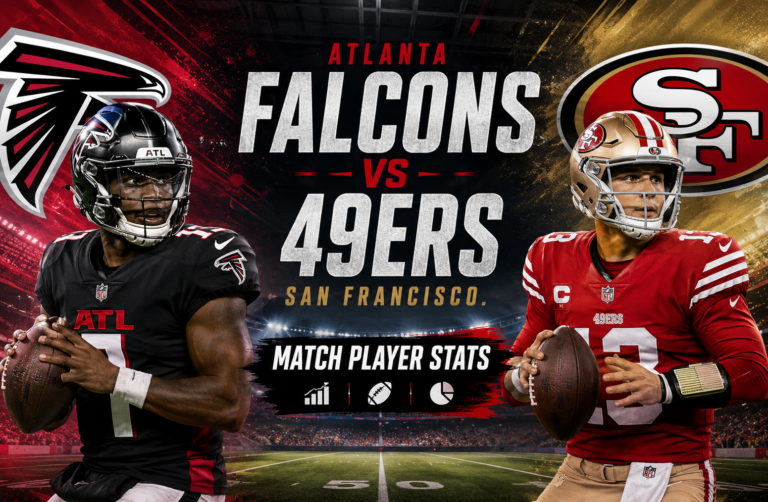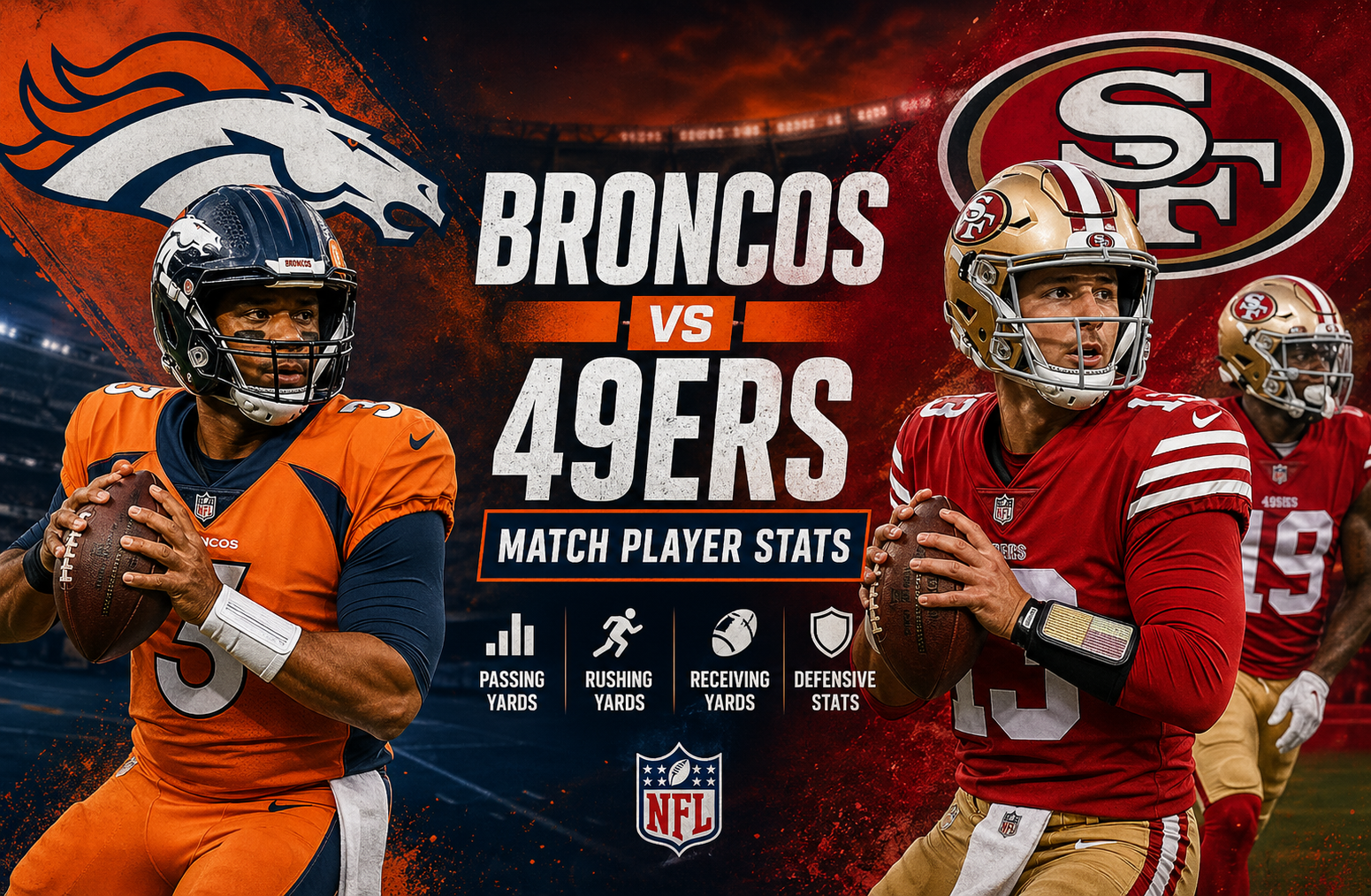
Denver Broncos vs San Francisco 49ers Match Player Stats
The Denver Broncos vs San Francisco 49ers Match Player Stats reveal far more than just numbers on a scoreboard. They uncover strategy, player efficiency, coaching decisions, and the subtle moments that define outcomes in high-level football. Whether you are a passionate fan, a fantasy football player, or a data-driven analyst, understanding these stats offers deeper insight into how games are won and lost.
In this detailed guide, we will break down player performances, positional impact, tactical decisions, and real-world implications of the Denver Broncos and San Francisco 49ers matchup. This is not just a recap but an analytical exploration designed to help you interpret player stats like an expert.
Understanding Denver Broncos vs San Francisco 49ers Match Player Stats
When analyzing any NFL matchup, especially one involving teams like the Denver Broncos and San Francisco 49ers, it is important to move beyond surface-level statistics.
Key Categories of Player Stats
Player stats typically fall into the following categories:
- Offensive Stats
- Passing yards, completion percentage
- Rushing yards, yards per carry
- Receiving yards, targets, touchdowns
- Defensive Stats
- Tackles, sacks, interceptions
- Pass deflections and forced fumbles
- Special Teams
- Field goal accuracy
- Punt and kick return yards
Each of these categories plays a crucial role in shaping the overall narrative of the game.
Quarterback Performance Analysis
Quarterbacks often dominate headlines, and for good reason. Their decisions directly influence the pace and direction of the game.
Denver Broncos Quarterback Insights
Recent matchups have featured players like Russell Wilson leading the Broncos offense. His performance can be evaluated using:
- Completion percentage under pressure
- Red zone efficiency
- Turnover ratio
Wilson’s ability to extend plays and deliver deep passes has been both a strength and a challenge, depending on defensive schemes.
San Francisco 49ers Quarterback Insights
On the 49ers side, Brock Purdy has emerged as a precise and efficient passer.
Key strengths include:
- High accuracy on short and intermediate routes
- Strong decision-making under structured plays
- Effective use of play-action
Comparative Insight
- Broncos rely more on improvisation
- 49ers emphasize system-driven execution
This contrast is clearly reflected in the Denver Broncos vs San Francisco 49ers Match Player Stats.
Running Back Contributions
Running backs often determine time of possession and control the tempo of the game.
Broncos Ground Game
Players like Javonte Williams bring physicality and consistency.
Key metrics:
- Yards after contact
- Third-down conversions
- Explosive run plays
49ers Ground Game
The 49ers feature elite versatility with Christian McCaffrey.
Key advantages:
- Dual-threat capability
- High reception volume
- Red zone dominance
Key Takeaway
The 49ers often outperform in total offensive efficiency due to McCaffrey’s versatility, which is clearly visible in player stat comparisons.
Wide Receivers and Tight Ends Impact
Receiving units are critical in stretching defenses and creating scoring opportunities.
Denver Broncos Receiving Core
Key contributors include:
- Courtland Sutton
- Jerry Jeudy
Strengths:
- Deep ball threats
- Contested catches
Challenges:
- Inconsistent separation against elite defenses
San Francisco 49ers Receiving Core
The 49ers arguably have one of the most dynamic groups:
- Deebo Samuel
- George Kittle
- Brandon Aiyuk
Strengths:
- Yards after catch
- Creative play designs
- Versatility across formations
Insight
The 49ers’ offensive scheme maximizes player strengths, making their stats appear more efficient and impactful.
Defensive Performance Breakdown
Defense wins games, and this matchup highlights two very different defensive philosophies.
Denver Broncos Defense
The Broncos defense often focuses on:
- Aggressive pass rush
- Man-to-man coverage schemes
Key player:
- Patrick Surtain II
Strengths:
- Lockdown coverage
- Limiting explosive plays
San Francisco 49ers Defense
The 49ers defense is widely regarded as one of the best in the league.
Key player:
- Nick Bosa
Strengths:
- Elite pass rush
- Zone coverage discipline
- High turnover creation
Comparative Analysis
- Broncos excel in individual defensive matchups
- 49ers dominate through cohesive team defense
Key Statistical Trends from the Matchup
When reviewing the Denver Broncos vs San Francisco 49ers Match Player Stats, several patterns emerge:
Offensive Efficiency
- 49ers typically have higher yards per play
- Broncos rely more on big plays rather than sustained drives
Turnovers
- Turnover margin often favors the 49ers
- Broncos struggle with consistency under pressure
Third Down Conversion
- 49ers show higher conversion rates due to better play design
- Broncos tend to stall in critical situations
Real World Applications of Player Stats
Understanding these stats is not just for entertainment.
Fantasy Football Strategy
- Prioritize players with consistent target share
- Focus on red zone usage over total yardage
Betting Insights
- Analyze turnover trends
- Evaluate quarterback efficiency under pressure
Coaching and Analysis
- Identify weaknesses in defensive schemes
- Adjust offensive play calling based on efficiency data
Challenges in Interpreting Player Stats
While stats are powerful, they are not perfect.
Common Limitations
- Context is often missing
- Garbage-time stats can mislead
- Team strategy impacts individual performance
Example
A quarterback with fewer yards might still be more efficient if they have:
- Higher completion percentage
- Better third-down success rate
Expert Insight and Observational Analysis
From an analytical perspective, one key observation stands out:
The San Francisco 49ers consistently translate player stats into winning outcomes because of system efficiency, while the Denver Broncos often rely on individual brilliance.
This difference is not always obvious in raw numbers but becomes clear when analyzing situational performance.
How to Analyze Future Matchups
To truly understand games like this, follow these steps:
- Focus on efficiency metrics rather than totals
- Compare situational performance such as red zone and third down
- Evaluate defensive pressure and its impact on quarterbacks
- Look at player usage trends over multiple games
For deeper statistical frameworks, you can explore resources from Pro Football Reference which provide reliable historical data.
FAQs
What are the most important stats in this matchup?
Quarterback efficiency, turnover margin, and third-down conversions are the most critical indicators.
Who usually performs better in this matchup?
Historically, the San Francisco 49ers show more consistent team performance due to structured gameplay.
How do running backs impact the game outcome?
Running backs control tempo and contribute significantly in both rushing and receiving, especially in modern offenses.
Are defensive stats as important as offensive stats?
Yes, defensive stats like sacks and turnovers often determine game momentum and final outcomes.
Can player stats predict future performance?
They provide strong indicators but should always be combined with context such as injuries and match conditions.
Conclusion
The Denver Broncos vs San Francisco 49ers Match Player Stats offer a comprehensive view of how modern football operates at the highest level. Beyond numbers, they reflect coaching philosophy, player adaptability, and execution under pressure.
The 49ers tend to excel through structured systems and balanced gameplay, while the Broncos rely more on individual performances and explosive plays. Understanding this distinction allows fans and analysts to interpret games with greater clarity and depth.