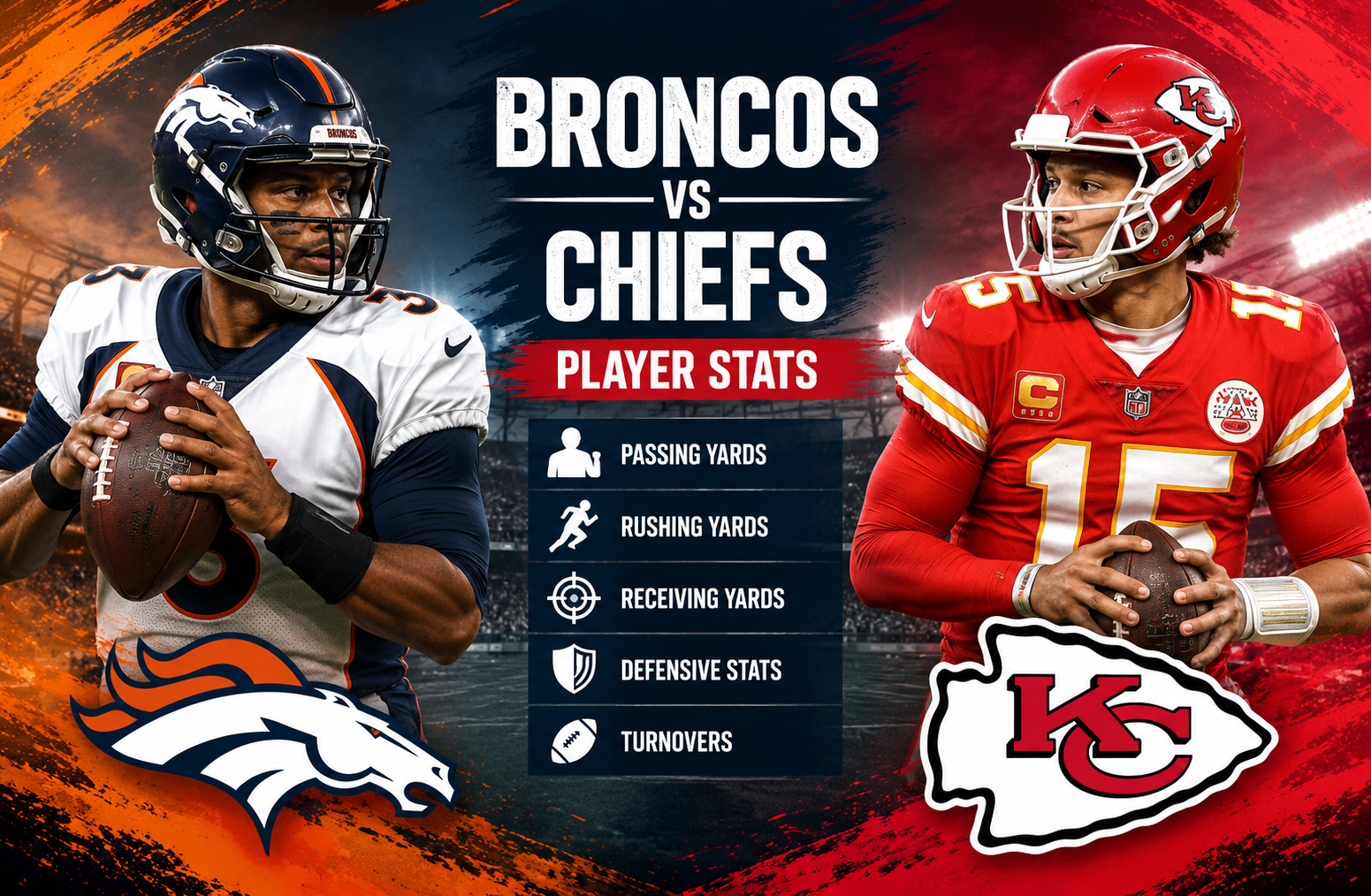
Denver Broncos vs Kansas City Chiefs Match Player Stats
The rivalry behind Denver Broncos vs Kansas City Chiefs Match Player Stats continues to attract NFL fans because every meeting between these AFC West teams delivers drama, tactical battles, and standout individual performances. From quarterback efficiency to defensive pressure rates, this matchup often reveals which roster is truly built for postseason football. Whether fans are studying recent performances, fantasy football implications, or tactical advantages, understanding player statistics from this rivalry provides deeper insight into how games are won and lost.
The modern NFL is driven by analytics, and few divisional matchups demonstrate that better than Denver versus Kansas City. The Chiefs have dominated many recent meetings, largely because of elite quarterback play and offensive consistency. Meanwhile, the Broncos have attempted to rebuild around stronger defensive schemes, improved offensive balance, and more efficient quarterback management. Looking closely at player numbers helps explain why momentum swings the way it does in this rivalry.
Why This Rivalry Matters in the AFC West
The AFC West remains one of the NFL’s most competitive divisions. Every divisional game affects playoff seeding, momentum, and long term roster confidence. When the Broncos and Chiefs face off, the intensity goes beyond regular season standings.
Several factors make this matchup unique:
- Longstanding divisional history
- Elite quarterback matchups in recent seasons
- Defensive schemes designed specifically for division rivals
- Strong fan engagement across the NFL
- Fantasy football relevance for offensive stars
Kansas City’s offensive system has evolved into one of the league’s most efficient attacks, while Denver has repeatedly focused on defensive adaptability to counter explosive passing offenses. That tactical contrast creates compelling statistical battles every season.
Denver Broncos vs Kansas City Chiefs Match Player Stats Breakdown
To understand this rivalry properly, player stats must be viewed in context rather than as isolated numbers. Football is highly situational. A quarterback’s completion percentage, for example, means more when examined alongside pressure rates, third down efficiency, and red zone performance.
Quarterback Performance Comparison
Quarterback play usually defines this matchup. Over recent seasons, Kansas City has consistently produced explosive passing numbers, while Denver has often relied on shorter passing concepts and controlled offensive drives.
Kansas City Chiefs Quarterback Production
Kansas City’s offensive success is largely tied to elite quarterback efficiency:
- High completion percentages under pressure
- Strong touchdown to interception ratios
- Exceptional third down conversion rates
- Deep passing accuracy
- Red zone efficiency
The Chiefs often attack defensive weaknesses through pre snap motion, quick route combinations, and aggressive vertical passing concepts. Their quarterback production is especially dangerous late in games when defenses become fatigued.
One major advantage Kansas City consistently demonstrates is pocket adaptability. Against Denver’s pass rush, quick decision making reduces sack opportunities and keeps offensive drives alive.
Denver Broncos Quarterback Trends
Denver’s quarterback production has fluctuated in recent years due to coaching changes, roster transitions, and offensive scheme adjustments. However, certain trends remain important:
- Improved short passing efficiency
- More emphasis on play action concepts
- Increased rushing quarterback usage
- Better time of possession management
- Reduced turnover rates in competitive games
When Denver performs well offensively against Kansas City, it usually comes from balanced football rather than explosive passing totals alone.
Running Back Statistics and Offensive Balance
Running backs play a crucial role in controlling tempo during divisional games. Possession football matters because it keeps opposing offenses off the field.
Kansas City Chiefs Running Game
Kansas City historically receives more attention for passing production, but their rushing attack often becomes a hidden advantage in critical moments.
Key strengths include:
- Efficient inside zone running
- Strong receiving production from backs
- Red zone rushing touchdowns
- Screen game effectiveness
- Short yardage conversion reliability
The Chiefs use running backs strategically rather than relying purely on high rushing volume. Defensive attention on the passing attack frequently creates lighter defensive fronts.
Denver Broncos Ground Attack
Denver traditionally builds offensive stability through physical rushing concepts. Against Kansas City, the Broncos often attempt to establish longer drives and reduce total possessions.
Important rushing statistics typically include:
- Yards after contact
- Fourth quarter rushing efficiency
- Third and short conversion rates
- Explosive runs over 15 yards
- Pass protection success
When Denver’s rushing attack performs effectively, games become far more competitive because Kansas City’s offense spends less time on the field.
Wide Receiver and Tight End Matchups
Receiver production often determines whether defenses can maintain coverage discipline throughout the game.
Kansas City Receiving Production
Kansas City’s offense emphasizes spacing, route timing, and yards after catch. Their receiving corps consistently creates matchup problems through motion and formation flexibility.
Important receiving metrics include:
- Separation rate
- Yards after catch
- Red zone targets
- Third down receptions
- Explosive play percentage
Tight end usage is especially important in this rivalry. Kansas City frequently attacks linebackers and safeties in intermediate coverage zones.
According to the official NFL statistics database, Kansas City consistently ranks near the top in offensive efficiency metrics during divisional play.
Denver Broncos Receiving Unit
Denver’s receiving success often depends on timing routes, contested catches, and situational execution. Against aggressive defensive schemes, route precision becomes critical.
Areas that usually define receiver performance include:
- Catch percentage
- Third down reliability
- Deep ball efficiency
- Yards per route run
- Red zone effectiveness
Denver’s offensive success improves significantly when receivers create early separation and prevent defensive pressure from disrupting passing rhythm.
Defensive Player Statistics That Shape the Rivalry
Defense remains one of the most overlooked aspects when discussing Denver Broncos vs Kansas City Chiefs Match Player Stats. Offensive numbers receive most of the headlines, but defensive production often determines game flow.
Denver Broncos Defensive Strengths
Denver has historically prioritized defensive structure, pass rush versatility, and secondary discipline.
Key defensive stats include:
- Quarterback pressure percentage
- Sacks per game
- Third down stops
- Forced turnovers
- Red zone defensive efficiency
Against Kansas City, Denver typically attempts to limit explosive plays while forcing longer offensive drives. That strategy increases the chance of mistakes or stalled possessions.
Edge rushers become especially important because disrupting timing is one of the few ways to slow elite passing attacks.
Kansas City Chiefs Defensive Performance
Kansas City’s defense has improved significantly in recent seasons through faster linebacker play, better secondary communication, and stronger pass rush rotation.
Critical defensive categories include:
- Blitz efficiency
- Coverage success rate
- Interceptions
- Defensive touchdowns
- Pressure generated without extra rushers
The Chiefs have become more balanced defensively, allowing them to remain competitive even when offensive production slows temporarily.
Offensive Line Battles Often Decide the Game
One of the least discussed but most influential statistical categories involves offensive line performance.
Why Offensive Line Stats Matter
Quarterback production depends heavily on:
- Pass blocking win rate
- Pressure allowed
- Sack prevention
- Run blocking success
- Penalty discipline
Kansas City’s offensive line improvements have significantly contributed to sustained offensive consistency. Denver, meanwhile, has emphasized physical line play to improve rushing production and pocket stability.
Games between these teams often swing based on trench performance rather than highlight plays alone.
Red Zone Efficiency Analysis
Red zone execution separates good teams from elite teams. Between these franchises, scoring touchdowns instead of field goals often becomes the deciding factor.
Kansas City Red Zone Strengths
Kansas City succeeds inside the 20 yard line because of:
- Creative play design
- Tight end mismatches
- Mobile quarterback movement
- Quick release passing
- Defensive confusion through motion
Their efficiency forces opponents to maximize nearly every offensive possession.
Denver Red Zone Challenges
Denver’s struggles in some recent matchups often came from:
- Protection breakdowns
- Penalties
- Incomplete third down passes
- Limited explosive plays
- Conservative play calling
Improved red zone efficiency remains one of the biggest keys for Denver if they want to consistently challenge Kansas City.
Third Down Statistics and Game Momentum
Third down efficiency directly affects possession control and defensive fatigue.
Chiefs Third Down Performance
Kansas City excels because they consistently create manageable third downs through early down success.
Important metrics include:
- Third down conversion percentage
- Average yards to gain
- Passing success under pressure
- Receiver separation
- Protection efficiency
Broncos Third Down Strategy
Denver often aims to:
- Reduce defensive substitutions
- Control possession length
- Wear down pass rush rotations
- Maintain balanced play calling
Sustained drives become essential when facing explosive offenses.
Turnover Margin and Hidden Game Factors
Turnovers often determine divisional outcomes because teams know each other extremely well schematically.
Important Turnover Related Stats
Key categories include:
- Interception rate
- Forced fumbles
- Recovery percentage
- Defensive scoring
- Field position after turnovers
Kansas City’s offensive discipline has frequently given them an advantage in turnover margin. Denver performs best when avoiding risky throws and winning field position battles.
Coaching Strategies Behind the Statistics
Player stats are heavily influenced by coaching philosophy and in game adjustments.
Kansas City Coaching Approach
Kansas City’s offensive structure emphasizes:
- Aggressive situational football
- Motion based mismatches
- Flexible personnel packages
- Fast scoring opportunities
- Quarterback creativity
This system maximizes player versatility and stresses defensive communication.
Denver Coaching Philosophy
Denver has increasingly focused on:
- Defensive discipline
- Controlled offensive pacing
- Efficient rushing balance
- Reduced turnovers
- Situational football
Against high powered offenses, disciplined execution matters more than risky aggression.
Fantasy Football Impact of This Matchup
Fantasy football players closely analyze Denver Broncos vs Kansas City Chiefs Match Player Stats because these games frequently feature high impact offensive performers.
Best Fantasy Indicators
Fantasy managers typically evaluate:
- Target share
- Red zone opportunities
- Snap counts
- Goal line usage
- Defensive matchup trends
Kansas City skill players often remain strong fantasy options due to offensive consistency. Denver players can become valuable based on matchup specific opportunities and game script.
Historical Trends in the Rivalry
Statistics become more meaningful when viewed historically.
Long Term Patterns
Common historical trends include:
- Kansas City offensive efficiency
- Denver defensive competitiveness
- Strong quarterback influence
- High importance of turnovers
- Divisional familiarity reducing explosive plays
Although Kansas City has controlled many recent meetings, rivalry games frequently remain more competitive than season records suggest.
How Analytics Changed NFL Matchup Evaluation
Modern football analysis extends far beyond traditional box scores.
Advanced metrics now include:
- EPA per play
- Success rate
- Pressure to sack conversion
- Coverage grade efficiency
- Explosive play rate
These numbers help explain why some teams consistently outperform others despite similar raw totals.
For example, a quarterback throwing for fewer yards may still produce greater offensive efficiency through higher success rates and fewer negative plays.
Defensive Matchups That Could Shape Future Games
Future Broncos versus Chiefs games may increasingly depend on defensive adaptability.
Areas to Watch
Important evolving trends include:
- Hybrid defensive backs
- Faster linebacker coverage
- Simulated pressures
- Rotational pass rush packages
- Coverage disguise frequency
As offenses become more sophisticated, defensive flexibility becomes essential.
Rookie and Young Player Development
Young talent often shifts divisional balance faster than expected.
Why Young Players Matter
Rookies influence games through:
- Speed mismatches
- Energy and physicality
- Scheme versatility
- Special teams contributions
- Rotational depth
Denver’s rebuilding strategy depends heavily on young player development, while Kansas City continues integrating new contributors into an already established system.
Special Teams Statistics Often Get Ignored
Special teams rarely receive headlines, but they strongly affect close divisional games.
Important special teams metrics include:
- Punt return average
- Kickoff field position
- Field goal accuracy
- Net punting
- Coverage efficiency
Hidden yardage frequently determines whether offenses begin drives in favorable positions.
Injury Impact on Player Performance
Football statistics never exist in isolation from roster health.
How Injuries Affect Production
Injuries influence:
- Offensive timing
- Defensive communication
- Rotation depth
- Protection assignments
- Explosive play potential
A healthy offensive line or secondary can dramatically change statistical outcomes in divisional matchups.
What Fans Often Misunderstand About NFL Stats
Raw numbers alone rarely tell the full story.
For example:
- High passing yards may result from trailing game scripts
- Low rushing totals may reflect defensive strategy
- Sack totals can depend on coverage quality
- Completion percentage may hide conservative play calling
Context matters more than isolated numbers.
Key Metrics Fans Should Track During the Game
Instead of focusing only on touchdowns and yardage, fans should monitor:
- Third down conversion rate
- Red zone touchdown percentage
- Pressure rate
- Turnover margin
- Average starting field position
- Explosive plays allowed
These categories usually explain the final result more accurately than total yardage alone.
Future Outlook for the Rivalry
The rivalry remains important because both franchises continue evolving strategically.
Kansas City aims to maintain championship level consistency, while Denver seeks to close the competitive gap through smarter roster construction and improved offensive efficiency.
Future matchups could become increasingly balanced if Denver develops:
- More stable quarterback production
- Stronger offensive line consistency
- Better explosive play capability
- Improved situational offense
At the same time, Kansas City’s continued offensive innovation makes them difficult to slow down over four quarters.
FAQs
Why are Denver Broncos vs Kansas City Chiefs games so important?
These games directly impact AFC West standings and playoff positioning. The rivalry also features high level quarterback play and strong defensive adjustments.
Which player stats matter most in this matchup?
Quarterback efficiency, third down conversions, turnover margin, and red zone performance are usually the most influential statistics.
Why has Kansas City performed better in recent meetings?
Kansas City has generally maintained stronger offensive consistency, elite quarterback production, and better situational efficiency.
Do defensive stats matter more than offensive stats in rivalry games?
Both matter, but defensive pressure and turnover creation often become decisive because divisional opponents know each other well strategically.
How does this matchup affect fantasy football?
Kansas City offensive players are frequently strong fantasy options, while Denver players can become valuable depending on defensive matchups and game flow.
Where can fans track official NFL player statistics?
Fans can monitor verified player statistics through official league databases and team reports throughout the season.
Conclusion
Denver Broncos vs Kansas City Chiefs Match Player Stats reveal far more than basic box score numbers. They highlight how coaching philosophy, quarterback efficiency, defensive adaptability, and situational football shape one of the NFL’s most recognized divisional rivalries. Kansas City’s offensive consistency has given them a major advantage in recent seasons, but Denver’s defensive structure and rebuilding approach continue to create competitive opportunities.
Understanding advanced metrics, contextual performance, and player specific contributions allows fans to appreciate the deeper tactical battle behind every matchup. As both franchises continue evolving, future games will likely produce even more fascinating statistical storylines across offense, defense, and special teams.