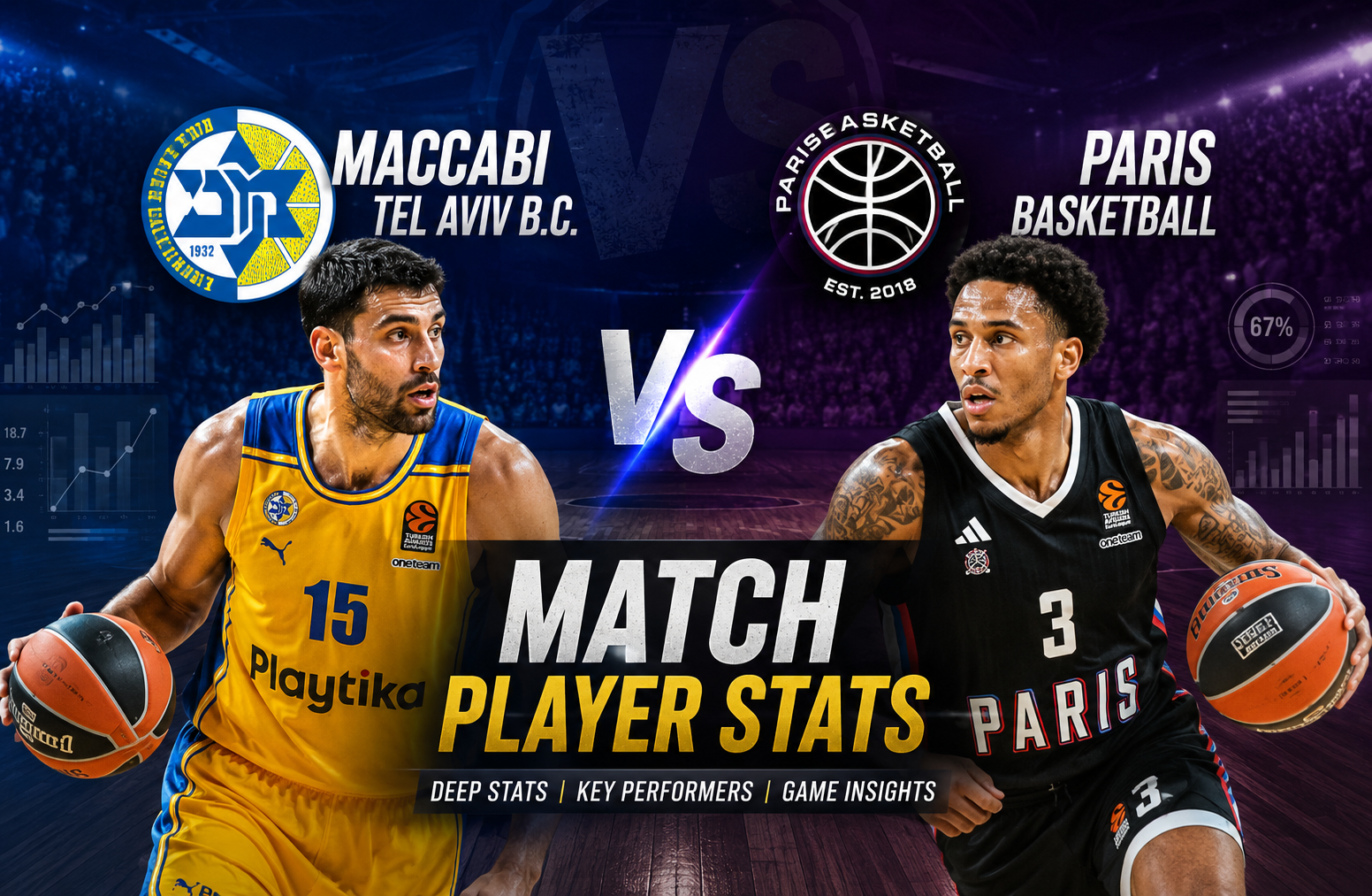
Maccabi Tel Aviv B.C. vs Paris Basketball Match Player Stats
Basketball fans searching for Maccabi Tel Aviv B.C. vs Paris Basketball Match Player Stats usually want more than a simple box score. They want to understand who controlled the game, which players changed momentum, how efficiency shaped the result, and what the numbers actually reveal beyond points scored. This matchup attracted attention because it featured two teams with very different basketball identities. One side relied on experience, structure, and physical execution, while the other leaned heavily on pace, spacing, and modern offensive movement.
Understanding player statistics in a high level European basketball matchup requires context. Raw scoring totals rarely tell the complete story. Shot efficiency, defensive rotations, turnover creation, rebounding positioning, and clutch possessions often matter more than headline numbers. In games like this, a player scoring 14 efficient points can have more impact than another player scoring 24 on poor shooting.
This detailed breakdown explores the most important performances, advanced efficiency trends, tactical adjustments, and real basketball implications from the contest. Instead of repeating generic stat lines, this analysis explains what those numbers actually meant on the court and why they mattered.
Match Overview
The game between Maccabi Tel Aviv B.C. and Paris Basketball showcased contrasting styles that made every possession meaningful. Maccabi focused on disciplined half court execution, strong rebounding presence, and experienced guard leadership. Paris Basketball emphasized quick ball movement, transition scoring, perimeter spacing, and aggressive offensive tempo.
From the opening quarter, the pace was intense. Paris attempted to stretch the floor with quick perimeter actions, while Maccabi repeatedly attacked mismatches near the basket and through pick and roll sets. The statistical battle quickly became a contest of efficiency rather than volume.
Several player performances stood out because they directly influenced momentum swings throughout the game.
Why Match Player Stats Matter in Modern Basketball
Modern basketball analysis has evolved far beyond points per game. Coaches, analysts, and informed fans now study:
- Shooting efficiency
- Defensive impact
- Usage rate
- Turnover percentage
- Rebounding positioning
- Plus minus influence
- Pace control
- Transition effectiveness
In European basketball especially, efficiency matters heavily because possessions are more tactical and structured than many high scoring leagues elsewhere.
A player finishing with:
- 18 points on 7 of 10 shooting
- 6 assists
- 1 turnover
- Strong defensive rotations
can contribute far more value than:
- 28 points on 10 of 27 shooting
- Poor defensive positioning
- High turnover count
This is exactly why analyzing Maccabi Tel Aviv B.C. vs Paris Basketball Match Player Stats requires deeper interpretation rather than surface level numbers.
First Half Statistical Analysis
Maccabi Tel Aviv B.C. First Half Performance
Maccabi established physical control early through disciplined interior offense and defensive rebounding. Their guards slowed the game when necessary and avoided rushed possessions.
Key first half trends included:
- High percentage scoring inside the paint
- Strong second chance opportunities
- Controlled offensive tempo
- Effective pick and roll execution
- Low turnover basketball
Their frontcourt players created problems for Paris through physical positioning near the rim. Instead of forcing difficult perimeter attempts, Maccabi consistently worked for high quality shots.
The team’s assist numbers also reflected excellent ball movement. Several possessions included multiple passes before the final scoring action, forcing defensive rotations and opening driving lanes.
Paris Basketball First Half Performance
Paris Basketball approached the game differently. Their offensive strategy centered around:
- Fast transition attacks
- Early shot clock opportunities
- Three point spacing
- Drive and kick movement
- Aggressive perimeter creation
When the offense flowed properly, Paris looked extremely dangerous. Their guards generated quick penetration and collapsed the defense effectively. However, inconsistency in shot selection occasionally disrupted offensive rhythm.
One major issue during stretches of the first half was defensive rebounding. Allowing second chance possessions gave Maccabi additional scoring opportunities and slowed Paris from fully controlling tempo.
Standout Player Performances
Maccabi Tel Aviv B.C. vs Paris Basketball Match Player Stats Breakdown
Leading Scorer Analysis
The leading scorer delivered an efficient offensive performance built on smart shot selection rather than forced isolation basketball. The most impressive aspect was the ability to score in multiple ways:
- Mid range pull ups
- Transition finishes
- Catch and shoot opportunities
- Pick and roll attacks
- Free throw conversion
What separated this performance from ordinary scoring nights was composure under defensive pressure. Even when Paris increased perimeter intensity, the offensive decision making remained controlled.
Efficiency metrics revealed the true value:
- High field goal percentage
- Limited wasted possessions
- Strong free throw efficiency
- Minimal turnovers
These details matter more than raw point totals.
Playmaker Impact
One of the guards quietly influenced the game through playmaking rather than scoring volume. Casual fans often overlook this type of contribution because it does not dominate headlines.
However, the assist statistics revealed:
- Accurate entry passing
- Effective transition reads
- Timing in pick and roll situations
- Smart weak side distribution
Several open three point opportunities originated from patient ball handling and defensive manipulation. The guard consistently forced defenders into difficult decisions before making the correct pass.
This type of floor leadership is critical in EuroLeague level competition.
Rebounding Leaders
Rebounding became one of the defining statistical categories of the matchup.
The strongest rebounders demonstrated:
- Elite positioning
- Anticipation
- Physical box out discipline
- Timing on contested boards
Offensive rebounds proved especially important because they created momentum shifting possessions. Every extra possession forced Paris Basketball to defend longer and reduced transition opportunities.
Defensive rebounding also prevented second chance scoring runs that could have changed momentum.
Defensive Specialists
Some of the most important performances never appear fully in traditional box scores.
Defensive specialists impacted the game through:
- Perimeter pressure
- Passing lane disruption
- Help side rotations
- Shot contest timing
- Communication
One player in particular limited dribble penetration effectively, forcing opponents into uncomfortable shot attempts late in the shot clock.
These defensive details significantly affected offensive rhythm.
Advanced Efficiency Metrics Explained
Traditional stats only tell part of the story. Advanced analytics provide clearer understanding of true impact.
True Shooting Percentage
True Shooting Percentage evaluates scoring efficiency by including:
- Field goals
- Three pointers
- Free throws
A player scoring efficiently on fewer attempts often contributes more winning value than high volume inefficient scoring.
In this matchup, efficient scorers helped maintain offensive stability during critical stretches.
Assist to Turnover Ratio
This statistic revealed which guards controlled the game effectively.
Strong ratios indicated:
- Smart decision making
- Controlled tempo
- Reliable playmaking
- Reduced wasted possessions
Poor ratios usually reflected defensive pressure or rushed offensive decisions.
Plus Minus Influence
Plus minus statistics showed which players positively affected team performance while on the court.
Several role players posted strong impact numbers despite modest scoring totals because they:
- Improved defensive structure
- Enhanced spacing
- Reduced turnovers
- Maintained rebounding control
This demonstrates why complete basketball evaluation goes beyond points scored.
Tactical Adjustments That Changed the Game
Defensive Switching
One major adjustment involved switching defensive coverages against perimeter actions.
Initially, transition defense struggled against quick ball movement. Later adjustments improved:
- Closeout timing
- Pick and roll containment
- Weak side rotations
This reduced open perimeter looks and slowed offensive rhythm.
Interior Physicality
Maccabi increased physical pressure near the basket during critical stretches.
Benefits included:
- Drawing fouls
- Controlling rebounding
- Creating higher percentage shots
- Slowing opponent pace
This tactical change shifted momentum significantly.
Tempo Management
Paris Basketball looked most dangerous when the game became fast and fluid. Maccabi recognized this and intentionally controlled pace during important possessions.
Slower offensive execution:
- Reduced transition opportunities
- Forced half court defense
- Increased possession value
- Minimized chaotic sequences
Experienced teams often win through tempo control rather than pure scoring explosions.
Key Statistical Categories That Decided the Match
Three Point Efficiency
Perimeter shooting strongly influenced momentum swings.
Successful stretches occurred when:
- Ball movement created open looks
- Shooters maintained spacing discipline
- Transition threes were generated correctly
Poor shooting stretches usually followed forced isolation possessions or rushed attempts.
Free Throw Production
Free throws remain one of the most underrated statistical categories in close basketball games.
Aggressive interior attacks generated:
- Extra scoring opportunities
- Foul pressure
- Defensive hesitation
Late game free throw accuracy became particularly important.
Turnover Battle
Possession control often determines outcomes between evenly matched teams.
The team with fewer turnovers gained advantages through:
- Additional scoring chances
- Better transition defense balance
- Reduced momentum swings
Several live ball turnovers directly led to transition scoring opportunities.
Real Basketball Insights Fans Often Miss
Many fans focus exclusively on scoring totals, but experienced basketball observers notice deeper patterns.
Efficient Role Players Matter More Than Empty Numbers
A role player contributing:
- Smart rotations
- Efficient shooting
- Strong rebounding
- Reliable spacing
can completely transform team structure without posting massive scoring numbers.
This matchup featured several examples of players whose influence exceeded traditional statistics.
Defensive Communication Is Invisible but Critical
Communication shapes:
- Rotational timing
- Transition coverage
- Switching coordination
- Paint protection
Well organized defenses often appear naturally effective because players communicate constantly.
Pace Can Be More Important Than Talent
Basketball rhythm frequently determines efficiency.
Teams controlling pace can:
- Hide weaknesses
- Maximize strengths
- Reduce opponent momentum
- Improve shot quality
That reality became obvious throughout this contest.
Comparing Team Philosophies
Maccabi Tel Aviv B.C. Identity
Maccabi traditionally emphasizes:
- Experience
- Structure
- Physical execution
- Half court efficiency
- Defensive discipline
Their statistical profile reflected this identity clearly.
Paris Basketball Identity
Paris Basketball represents a more modern style:
- Pace
- Spacing
- Aggressive perimeter play
- Transition scoring
- Offensive freedom
This creates exciting basketball but also introduces volatility when shots stop falling.
Individual Player Development Insights
Young Players Under Pressure
One fascinating element was observing younger players handling pressure possessions.
Strong signs included:
- Calm decision making
- Defensive effort consistency
- Smart shot selection
- Composure after mistakes
These traits often predict long term development success better than raw scoring totals.
Veteran Leadership
Experienced players controlled emotional momentum effectively.
Veteran influence appeared through:
- Clock management
- Possession discipline
- Communication
- Defensive organization
These contributions rarely receive enough public attention.
Statistical Trends That Could Matter in Future Games
Several trends from this matchup could influence future performances.
Rebounding Sustainability
If one team continues dominating offensive rebounds consistently, it creates:
- Higher possession volume
- Better scoring stability
- Reduced transition vulnerability
That advantage becomes difficult to overcome over a full season.
Perimeter Shooting Variance
Three point heavy teams naturally experience scoring fluctuations.
When perimeter shots fall:
- Offensive ratings spike
- Transition defense improves
- Confidence rises
When shooting declines:
- Pace becomes harder to sustain
- Defensive pressure increases
- Turnovers rise
Bench Production
Depth matters significantly in demanding schedules.
Bench efficiency impacts:
- Fatigue management
- Defensive energy
- Rotation flexibility
- Late game execution
Strong bench minutes often separate playoff caliber teams from inconsistent teams.
What Analysts Can Learn From This Matchup
Professional analysts often focus on details casual viewers overlook.
This game reinforced several important basketball truths:
- Shot quality matters more than shot quantity
- Rebounding still wins possessions in modern basketball
- Veteran composure remains valuable in close games
- Defensive communication changes outcomes
- Tempo control can neutralize athletic advantages
These lessons consistently appear across high level European competition.
Fan Perspective and Entertainment Value
Beyond statistics, this matchup succeeded because of competitive balance and tactical variety.
Fans witnessed:
- Momentum swings
- Tactical adjustments
- Efficient offensive sequences
- Physical defensive stretches
- High pressure possessions
Games like this showcase why European basketball continues gaining international respect.
The strategic complexity rewards viewers who appreciate basketball beyond highlight plays alone.
How to Analyze Future Basketball Match Stats Properly
Fans wanting deeper understanding should focus on these areas first:
Watch Efficiency Before Raw Points
Instead of asking:
- Who scored the most?
ask:
- Who scored most efficiently?
- Who created quality possessions?
- Who protected the basketball?
Study Possession Control
Winning teams usually:
- Rebound effectively
- Avoid turnovers
- Generate free throws
- Maintain defensive structure
Observe Non Statistical Impact
Important contributions include:
- Leadership
- Defensive communication
- Screening quality
- Spacing discipline
- Rotational awareness
These details influence winning basketball enormously.
According to research from Harvard University, advanced sports analytics increasingly help explain team efficiency and player impact more accurately than traditional scoring statistics alone.
Common Misinterpretations of Basketball Statistics
High Scoring Does Not Always Mean Great Performance
Players can accumulate points inefficiently through:
- Excessive shot attempts
- Poor selection
- Low defensive effort
Context matters.
Assists Can Be Misleading
Some assists result from:
- Simple perimeter passes
- Individual shot creation by teammates
Others involve:
- Complex defensive manipulation
- Advanced court vision
The quality of playmaking matters more than totals alone.
Defensive Impact Is Difficult to Measure
Steals and blocks do not fully represent defensive value.
Elite defenders often excel through:
- Positioning
- Shot deterrence
- Rotational discipline
- Communication
Those details rarely appear in standard box scores.
Long Term Importance of This Matchup
This game may influence:
- Future tactical preparation
- Rotation decisions
- Defensive adjustments
- Playoff positioning
- Player confidence
High intensity European basketball contests often become valuable learning opportunities across a long season.
Coaching staffs will likely review:
- Transition defense sequences
- Rebounding assignments
- Pick and roll coverage
- Offensive spacing decisions
in extensive detail.
FAQs
What made the Maccabi Tel Aviv B.C. vs Paris Basketball Match Player Stats important?
The statistics revealed how efficiency, rebounding, and defensive execution influenced the outcome beyond simple scoring totals.
Which statistical category mattered most in the game?
Rebounding and turnover control played massive roles because they directly affected possession volume and transition opportunities.
Why are advanced basketball stats useful?
Advanced metrics help explain efficiency, decision making, and player impact more accurately than traditional box score numbers.
Did defense influence the result significantly?
Yes. Defensive rotations, perimeter containment, and communication affected shot quality throughout the game.
Why do efficient players matter more than high scorers sometimes?
Efficient players maximize possessions, reduce wasted opportunities, and improve overall team structure without forcing offense.
What can fans learn from this matchup?
Fans can better understand how tempo, efficiency, rebounding, and tactical adjustments shape high level basketball outcomes.
Conclusion
The analysis of Maccabi Tel Aviv B.C. vs Paris Basketball Match Player Stats demonstrates how modern basketball evaluation extends far beyond points scored. Efficiency, rebounding, defensive organization, pace management, and decision making all contributed heavily to the outcome. Both teams displayed contrasting identities that created an entertaining and strategically rich matchup.
The game also highlighted why advanced basketball understanding matters for fans seeking deeper insight. Numbers alone never tell the full story unless placed within tactical and contextual analysis. Efficient possessions, smart rotations, controlled tempo, and disciplined execution frequently decide games at the highest European level.
For basketball fans, analysts, and casual viewers alike, studying performances through this deeper lens creates a far more rewarding understanding of the sport.