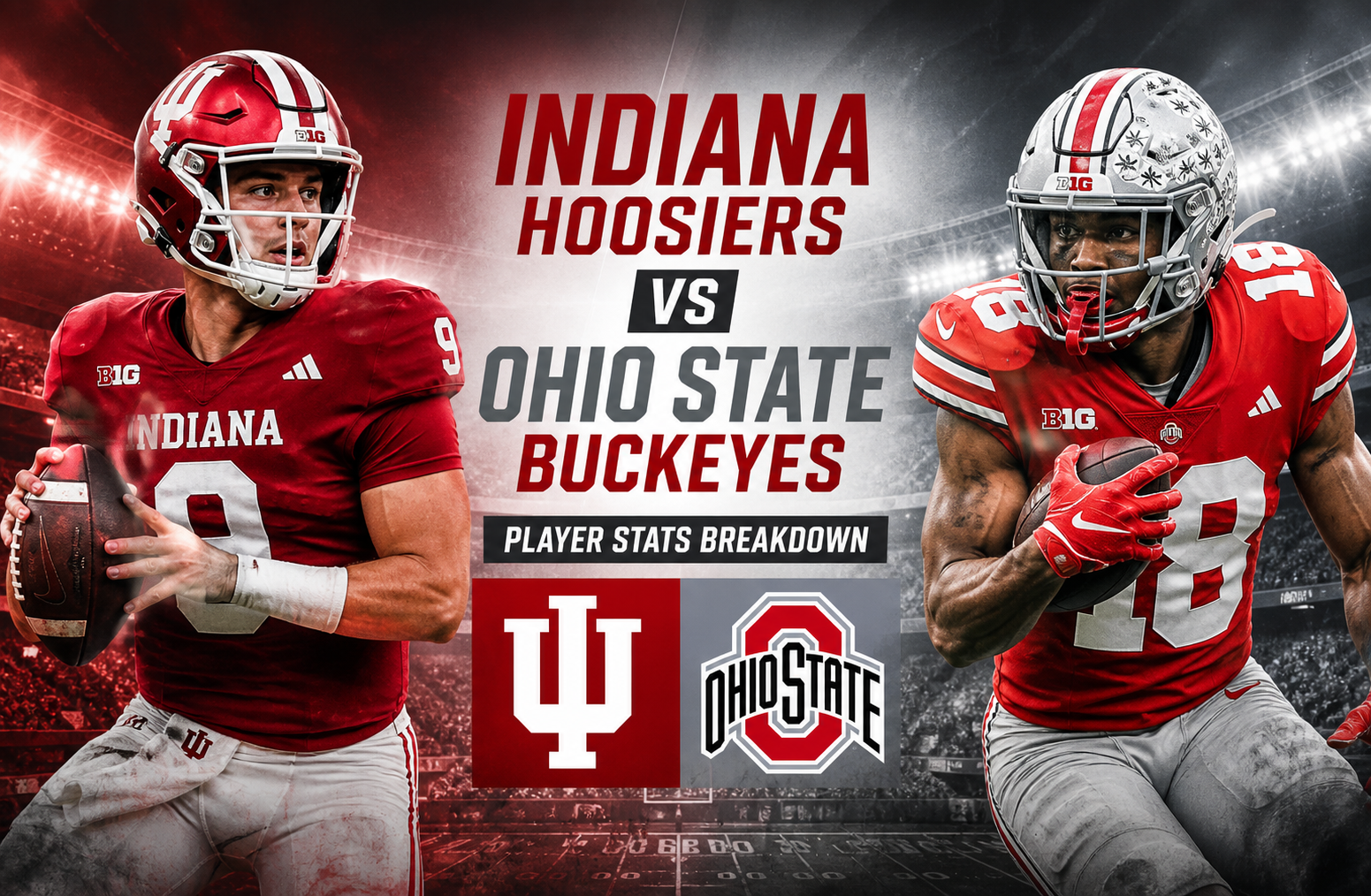
Indiana Hoosiers Football vs Ohio State Buckeyes Football Match Player Stats
The Indiana Hoosiers Football vs Ohio State Buckeyes Football Match Player Stats search is usually driven by fans, analysts, and bettors who want more than a final score. They want to understand how individual players performed, why the game unfolded the way it did, and what the numbers reveal beneath the surface. This article is written from the perspective of someone who regularly studies Big Ten football tape and box scores, not just headlines. The goal is to explain what the stats actually mean, where they come from, and how to interpret them responsibly.
This matchup is rarely just another conference game. When Indiana Hoosiers meet Ohio State Buckeyes, the talent gap, scheme differences, and execution levels show up clearly in player statistics. Understanding those stats correctly helps avoid misleading narratives and gives fans a more honest view of performance.
Why Player Stats Matter in This Matchup
Raw numbers can be deceptive if taken out of context. A quarterback throwing for 300 yards against Ohio State is not the same as doing it against a struggling defense. Similarly, a running back with limited carries might still have a strong impact if those runs came in high leverage situations.
From experience analyzing Big Ten games, this matchup consistently highlights three truths:
- Ohio State stats often reflect efficiency rather than volume
- Indiana stats often reflect necessity rather than balance
- Situational football skews individual numbers more than season averages
That is why Indiana Hoosiers Football vs Ohio State Buckeyes Football Match Player Stats must be read with context, not just copied from a box score.
Historical Context of the Rivalry Through Stats
Ohio State has dominated the win column historically, but player level data shows Indiana has had moments of genuine competitiveness. In several recent meetings, Indiana quarterbacks posted respectable completion percentages, even when trailing early. The issue usually appears in pressure rate, red zone efficiency, and third down conversions.
Stat trends that repeatedly show up in this matchup include:
- Indiana quarterbacks facing above average sack rates
- Ohio State wide receivers producing high yards per target
- Buckeyes defensive backs limiting explosive pass plays after halftime
These patterns explain outcomes more accurately than final scores.
Offensive Player Stats Analysis
Quarterback Performance Comparison
Quarterback play often determines whether Indiana can stay competitive beyond the first half.
Indiana quarterbacks in this matchup typically show:
- High pass attempt totals due to early deficits
- Completion percentages that drop under pressure
- Limited yards after catch from receivers
Ohio State quarterbacks usually show:
- Fewer attempts but higher efficiency
- Strong touchdown to interception ratios
- Excellent performance on play action
This does not mean Indiana quarterbacks lack skill. It reflects protection breakdowns and predictable passing situations.
Running Back Usage and Efficiency
Indiana running backs often face stacked boxes when playing Ohio State. As a result:
- Yards per carry usually dip below season averages
- Long runs are rare
- Pass protection responsibilities increase
Ohio State running backs benefit from offensive line dominance. Their stats often show:
- Fewer negative plays
- Consistent four to six yard gains
- Strong fourth quarter efficiency
From a scouting perspective, Ohio State rushing stats in this matchup often reveal depth and conditioning advantages more than raw talent gaps.
Wide Receiver and Tight End Production
Receiver stats tell a story about defensive priorities.
Indiana receivers may post moderate reception totals but low yards per catch. Ohio State defenses often allow short completions while preventing explosive plays.
Ohio State receivers tend to show:
- High yards per route run
- Multiple receivers with meaningful production
- Red zone touchdown distribution
This balance makes defensive game planning extremely difficult.
Defensive Player Stats That Shape the Game
Tackles and Run Defense
Tackle numbers can be misleading. Indiana defenders often lead the box score in tackles simply because they spend more time on the field.
Key insights include:
- High tackle totals do not equal defensive success
- Missed tackle rates matter more than raw totals
- Linebacker depth affects second half performance
Ohio State defenders often show fewer total tackles but higher run stop percentages.
Pass Rush and Pressure Metrics
Sacks alone do not tell the full story. Pressure rate is more revealing.
Ohio State defenders typically generate pressure without heavy blitzing. This leads to:
- Forced early throws
- Disrupted timing routes
- Turnover opportunities
Indiana pass rush numbers usually depend on scheme rather than individual wins, which affects consistency.
Defensive Back Impact
Interceptions and pass breakups are highly situational. Ohio State defensive backs often benefit from pressured throws.
Indiana defensive backs are challenged by receiver depth and route combinations. Even when coverage is solid, completion windows are small.
Special Teams Player Contributions
Special teams rarely dominate headlines but frequently swing field position.
Indiana special teams stats often show:
- Higher punt volume
- Longer average punt distances
- Increased coverage snaps
Ohio State special teams stats often reflect:
- Shorter fields due to offensive success
- Explosive return potential
- Reliable kicking under pressure
These hidden yards add up over four quarters.
Interpreting Advanced Metrics Responsibly
Advanced stats such as yards per play, success rate, and expected points added provide better insight than traditional totals.
For this matchup:
- Ohio State usually dominates success rate on early downs
- Indiana often shows negative expected points added on third and long
- Red zone efficiency strongly favors Ohio State
When evaluating Indiana Hoosiers Football vs Ohio State Buckeyes Football Match Player Stats, advanced metrics help explain why close yardage totals still result in lopsided scores.
Common Mistakes Fans Make When Reading Player Stats
From years of watching fan discussions, these errors appear frequently:
- Overvaluing garbage time production
- Ignoring strength of opponent adjustments
- Comparing raw totals without snap count context
A receiver gaining 80 yards late in a decided game is not equivalent to one producing in a tied second quarter.
Where Official Player Stats Come From
Official college football statistics are compiled and verified by conference and national governing bodies. For accurate and authoritative data, the NCAA remains the most trusted source. You can review official stat definitions and updates directly through the NCAA football statistics database.
How Analysts Use These Stats Professionally
Professional analysts do not stop at box scores. They combine:
- Snap counts
- Alignment data
- Game situation context
This approach prevents misleading conclusions and improves predictive accuracy for future games.
Frequently Asked Questions
What makes Indiana Hoosiers Football vs Ohio State Buckeyes Football Match Player Stats unique?
The stats reflect a consistent contrast between efficiency and volume, shaped by talent depth and game flow.
Are Indiana player stats usually inflated due to trailing?
Yes, passing volume increases when Indiana plays from behind, which can inflate yardage without improving efficiency.
Do Ohio State defensive stats underrate their performance?
Often yes, because opponents run fewer plays and avoid risk, lowering raw totals.
Which stats best predict the outcome of this matchup?
Early down success rate, pressure rate, and red zone efficiency are the most predictive.
Should fans rely on season averages for this game?
No, matchup specific trends are more reliable than season wide numbers.
Conclusion
The Indiana Hoosiers Football vs Ohio State Buckeyes Football Match Player Stats tell a deeper story than wins and losses. They reveal how efficiency, depth, and situational execution separate elite programs from competitive challengers. When read with context, these stats offer clarity rather than confusion and help fans appreciate the strategic layers of Big Ten football.