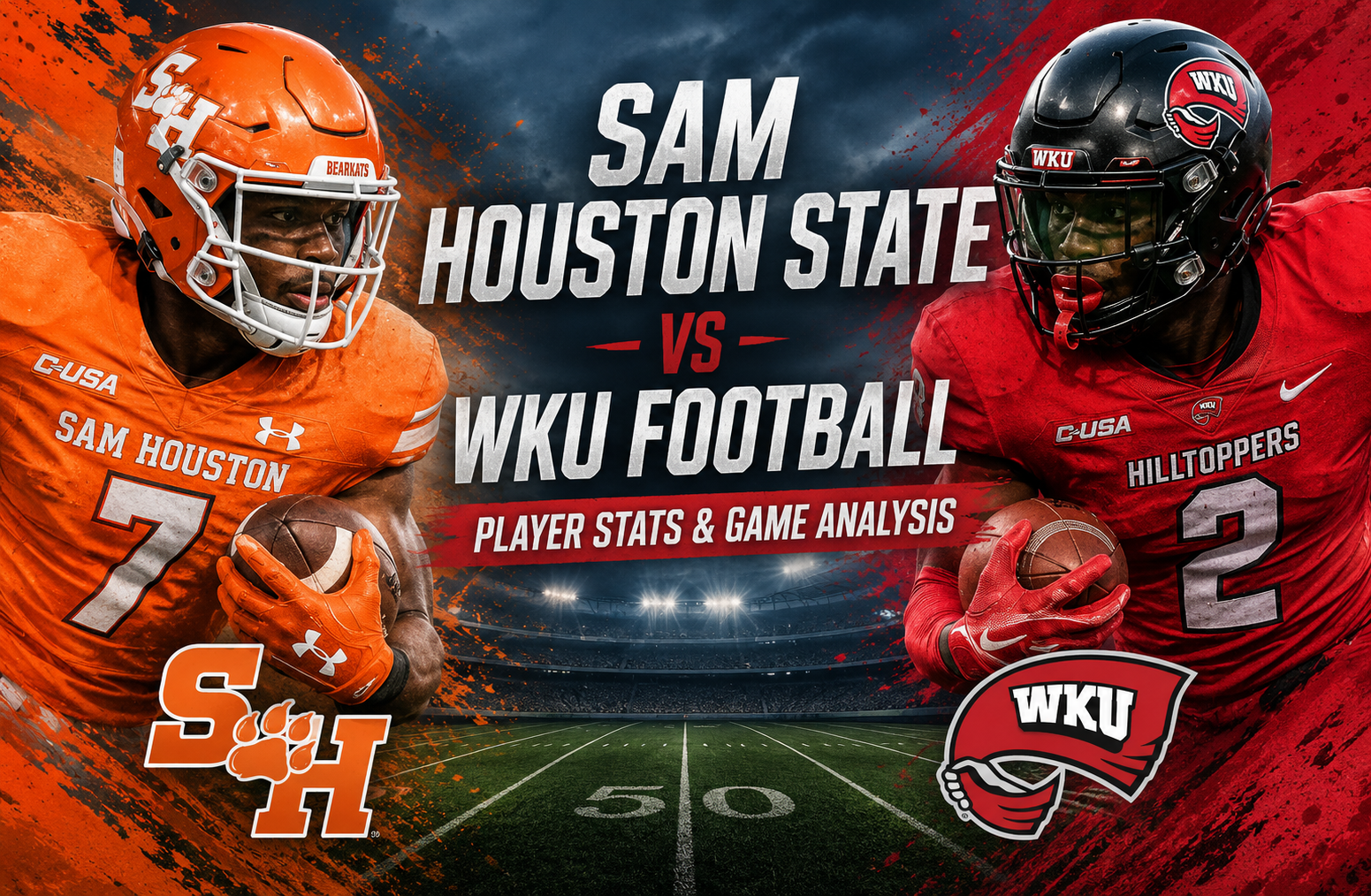
Sam Houston State Football vs Wku Football Match Player Stats
College football fans often search for detailed player breakdowns after a big matchup because raw scores rarely tell the full story. Sam Houston State Football vs Wku Football Match Player Stats reveal much more than who won or lost. The numbers explain how momentum shifted, which players controlled key moments, and why specific coaching decisions shaped the final outcome.
When analyzing a matchup between Sam Houston State and Western Kentucky, the statistics highlight two different football identities. Sam Houston State usually relies on disciplined defensive execution, efficient rushing attacks, and field position management. Western Kentucky often leans into aggressive passing schemes, high tempo offense, and explosive downfield production.
Looking closely at individual performances provides a much clearer understanding of how the game unfolded. Quarterback efficiency, defensive stops, third down conversions, red zone execution, and special teams production all become important pieces of the overall story.
This article takes a deep look into the matchup from a player performance perspective while also explaining what the numbers mean for fans, analysts, coaches, and future opponents.
Understanding the Importance of Player Stats in College Football
Player statistics are not just numbers listed on a scoreboard. They are indicators of strategy, preparation, execution, and in game adjustments.
In modern college football, advanced statistical analysis has become essential for:
- Evaluating team strengths and weaknesses
- Predicting future performance
- Measuring player development
- Understanding coaching philosophy
- Comparing offensive and defensive systems
- Identifying momentum changing plays
For example, a quarterback may throw for 300 yards, but deeper analysis might show that most of those yards came during garbage time. Similarly, a running back with only 75 rushing yards may have delivered several critical third down conversions that kept drives alive.
This is why contextual analysis matters when reviewing Sam Houston State Football vs Wku Football Match Player Stats.
Offensive Identity Comparison
One of the most fascinating aspects of this matchup is the contrast in offensive philosophy.
Sam Houston State Offensive Style
Sam Houston State often focuses on:
- Ball control offense
- Conservative passing concepts
- Physical rushing attacks
- Short yardage efficiency
- Protecting field position
- Limiting turnovers
The Bearkats usually emphasize discipline over explosiveness. Their offensive structure aims to reduce mistakes while wearing down opposing defenses over four quarters.
Quarterbacks in this system are frequently judged more by decision making than flashy passing totals.
Western Kentucky Offensive Style
Western Kentucky has built a reputation around aggressive offensive football.
Key characteristics include:
- Vertical passing concepts
- Fast paced tempo
- Heavy shotgun usage
- Spread formations
- High passing volume
- Frequent deep shots downfield
This style creates opportunities for large statistical performances, especially for quarterbacks and wide receivers.
Because of this contrast, the player statistics from this matchup often tell two completely different stories depending on which side of the ball is being analyzed.
Quarterback Performance Analysis
Quarterback play typically defines the direction of games like this.
Sam Houston State Quarterback Evaluation
When evaluating the Sam Houston State quarterback, the most important statistics usually include:
- Completion percentage
- Third down conversions
- Turnover avoidance
- Time of possession contribution
- Red zone efficiency
A productive performance for Sam Houston State does not always require huge passing yard totals.
Instead, efficiency becomes the key metric.
For example, completing short and intermediate throws while avoiding sacks and interceptions can be more valuable than attempting risky vertical passes.
In games against high powered offenses like Western Kentucky, controlling the pace becomes critical. If the quarterback consistently sustains drives, the defense receives more rest and the opponent gets fewer possessions.
Western Kentucky Quarterback Evaluation
Western Kentucky quarterbacks are often evaluated through a completely different lens.
Important categories include:
- Passing yards
- Touchdown production
- Explosive pass plays
- Yards per attempt
- Deep ball accuracy
- Offensive tempo management
Because the Hilltoppers frequently rely on aggressive aerial attacks, quarterback confidence and rhythm become central to success.
If the quarterback establishes early momentum, the offense can become extremely difficult to contain.
However, aggressive passing systems also increase turnover risk.
Interceptions against disciplined defenses can quickly shift momentum.
Running Back Contributions
Running back production often becomes one of the most underrated aspects of games involving explosive passing teams.
Sam Houston State Rushing Attack
The Bearkats usually rely on their running backs for:
- Clock management
- Short yardage situations
- Red zone production
- Defensive fatigue creation
- Offensive balance
Even when rushing totals appear modest, consistent four or five yard gains can transform the game.
Successful rushing attacks also reduce pressure on the quarterback.
Against fast paced teams like Western Kentucky, controlling possession time becomes especially important.
Western Kentucky Running Game
Western Kentucky frequently uses the run game differently.
Rather than building the entire offense around rushing attempts, the running attack often serves to:
- Keep defenses honest
- Create play action opportunities
- Exploit light defensive boxes
- Support tempo offense
Running backs in this system may produce fewer carries but higher efficiency.
A single explosive run can completely alter defensive structure and open up the passing game.
Wide Receiver Matchups
Wide receiver production usually becomes one of the most discussed parts of Sam Houston State Football vs Wku Football Match Player Stats.
Sam Houston State Receivers
Sam Houston State receivers are often tasked with:
- Possession catches
- Third down conversions
- Blocking support
- Intermediate route execution
- Maintaining drive consistency
While they may not always produce massive yardage totals, their reliability becomes extremely important.
In structured offenses, precise route running matters more than highlight plays.
Western Kentucky Receivers
Western Kentucky receivers often generate significant statistical attention.
Their responsibilities frequently include:
- Stretching the field vertically
- Creating yards after catch
- Winning one on one matchups
- Producing explosive plays
- Forcing defensive adjustments
When these receivers establish rhythm early, opposing secondaries can quickly become overwhelmed.
This often leads to inflated passing totals and rapid scoring sequences.
Defensive Statistics That Matter Most
Many fans focus almost entirely on offensive production, but defensive numbers often determine outcomes in close games.
Tackles and Defensive Positioning
High tackle totals can sometimes be misleading.
A linebacker recording 15 tackles may indicate strong activity, but it could also suggest the defense struggled to stop sustained drives.
More meaningful indicators include:
- Tackles for loss
- Third down stops
- Red zone defense
- Pressure rate
- Missed tackle percentage
- Run stop efficiency
Pass Rush Impact
Pressure statistics are especially important against Western Kentucky.
Quarterbacks operating in tempo offenses become far less effective when forced off rhythm.
Defensive linemen who consistently collapse the pocket can disrupt:
- Timing routes
- Deep pass development
- Protection schemes
- Offensive confidence
Sacks are valuable, but constant quarterback pressure can be equally damaging.
Secondary Performance
Defensive backs face unique challenges against aggressive passing attacks.
Important secondary metrics include:
- Pass breakups
- Coverage consistency
- Explosive plays allowed
- Interceptions
- Completion percentage allowed
One blown coverage can completely change the game.
Because of this, secondary discipline becomes essential.
Special Teams Influence
Special teams statistics are often ignored until they decide a close game.
In matchups between evenly matched teams, hidden yardage becomes critical.
Important special teams categories include:
- Punt average
- Kick return yardage
- Field goal accuracy
- Net punting
- Starting field position
A strong punter can consistently pin offenses deep inside their own territory.
Likewise, a missed field goal can completely alter momentum.
Games involving contrasting offensive styles frequently become field position battles, making special teams even more important.
Third Down Efficiency and Game Control
Third down performance is one of the clearest indicators of overall team control.
Teams that consistently convert third downs:
- Sustain drives
- Control clock possession
- Exhaust opposing defenses
- Limit opponent possessions
- Increase scoring opportunities
For Sam Houston State, successful third down execution usually reflects disciplined offensive football.
For Western Kentucky, explosive third down plays can rapidly change momentum.
A team may gain more total yards overall but still lose because of poor situational execution.
This is why advanced statistical analysis goes beyond traditional box scores.
Red Zone Production
Red zone performance often separates winning teams from losing teams.
Moving the ball between the twenties matters, but finishing drives matters more.
Offensive Red Zone Metrics
Important categories include:
- Touchdown percentage
- Field goal percentage
- Turnovers inside the red zone
- Goal line rushing efficiency
- Quarterback decision making
Defensive Red Zone Metrics
Strong red zone defenses force:
- Field goal attempts instead of touchdowns
- Negative plays
- Pressure mistakes
- Tight window throws
In games featuring explosive offenses, red zone stops can completely swing momentum.
Turnovers and Momentum Swings
Turnovers remain one of the strongest predictors of football outcomes.
Interceptions and fumbles do more than change possession.
They also:
- Shift momentum
- Impact field position
- Alter play calling
- Affect player confidence
- Change crowd energy
Aggressive offenses naturally carry more turnover risk.
Defensive minded teams often build their entire strategy around forcing mistakes.
A single turnover in a close matchup can determine the final result.
Coaching Decisions Reflected Through Statistics
Player statistics often reveal coaching philosophy.
For example:
- High rushing volume may indicate clock control strategy
- Fourth down aggression reflects confidence levels
- Defensive blitz frequency shows risk tolerance
- Receiver target distribution reveals offensive priorities
Experienced analysts frequently study trends rather than isolated numbers.
Patterns across multiple drives provide deeper insight into coaching adjustments and preparation.
Why Advanced Metrics Matter
Traditional box scores only scratch the surface.
Advanced football metrics provide a much clearer understanding of efficiency and impact.
Useful advanced categories include:
- EPA per play
- Success rate
- Explosive play percentage
- Pressure rate
- Yards after contact
- Coverage grade analysis
These metrics help separate empty production from meaningful impact.
Fans interested in deeper football analysis often rely on advanced statistical databases for detailed breakdowns. The official resource from the NCAA statistics database provides trusted team and player data for comparison and research.
Player Development Insights
Another important aspect of player statistics is long term development.
Coaches and scouts evaluate more than single game production.
They look for:
- Consistency improvement
- Decision making growth
- Physical development
- Situational awareness
- Leadership qualities
A quarterback showing improved pocket awareness may be progressing even if passing totals remain similar.
Likewise, defensive players can demonstrate significant growth through positioning and communication.
How Fans Interpret Match Player Stats
Fans often approach football statistics emotionally.
However, deeper interpretation requires context.
For example:
- A receiver with low yardage may have faced double coverage all game
- A running back may sacrifice individual numbers to support pass protection
- A quarterback may intentionally avoid risky throws
- Defensive schemes may prioritize limiting explosive plays instead of chasing sacks
Understanding these nuances creates a much richer appreciation for the game.
The Role of Tempo in Statistical Production
Tempo dramatically affects player numbers.
Western Kentucky’s faster offensive pace can naturally create:
- More offensive snaps
- Higher passing totals
- Increased scoring opportunities
- More receiver targets
Meanwhile, slower paced offenses may produce fewer raw statistics despite strong efficiency.
This is why per play analysis often matters more than total yardage.
Defensive Fatigue and Late Game Statistics
Late game production often reflects conditioning and roster depth.
Defenses facing high tempo attacks can wear down physically.
Signs of fatigue include:
- Missed tackles
- Reduced pass rush pressure
- Coverage breakdowns
- Slower pursuit angles
Fourth quarter statistics sometimes tell a completely different story from first half production.
Teams with strong depth usually maintain consistency longer.
Recruiting Impact and Future Implications
Strong player performances in nationally discussed matchups can influence:
- Recruiting momentum
- National perception
- Conference reputation
- Coaching evaluations
- Player draft discussions
College football is heavily narrative driven.
A breakout performance can dramatically raise a player’s visibility.
Quarterbacks, receivers, and edge rushers especially benefit from high profile statistical performances.
Common Misunderstandings About Football Stats
Many football discussions oversimplify player evaluation.
Some common mistakes include:
Overvaluing Total Yardage
Total yardage alone does not measure efficiency.
A team can gain huge yardage totals while struggling in key situations.
Ignoring Situational Football
Third downs, red zone execution, and turnover margin often matter more than overall volume.
Blaming Individual Players for System Issues
Poor offensive line play can dramatically impact quarterback numbers.
Likewise, weak pass rush support can expose defensive backs.
Football remains one of the most interconnected team sports.
What Makes This Matchup Interesting for Analysts
Analysts are often drawn to games featuring contrasting styles.
Sam Houston State and Western Kentucky present:
- Different offensive philosophies
- Different tempo strategies
- Different defensive priorities
- Different approaches to risk management
This contrast creates fascinating statistical comparisons.
One team may dominate time of possession while the other produces explosive scoring plays.
These dynamics make statistical interpretation especially important.
Lessons Coaches Can Learn From the Matchup
Coaches reviewing Sam Houston State Football vs Wku Football Match Player Stats can identify:
- Defensive adjustment opportunities
- Protection weaknesses
- Coverage communication issues
- Tempo management strategies
- Situational decision making trends
Film study combined with statistical analysis provides the clearest picture of overall performance.
Numbers alone rarely tell the full story, but they become extremely powerful when paired with tactical evaluation.
How Modern Analytics Are Changing Football Discussions
College football analysis has evolved significantly.
Fans today expect deeper insight than basic box scores.
Modern discussions now include:
- Efficiency analysis
- Matchup exploitation
- Predictive modeling
- Situational breakdowns
- Player tracking concepts
This evolution has changed how teams prepare, recruit, and evaluate talent.
Data driven decision making continues to influence every level of football.
FAQs
Why are player stats important in college football analysis?
Player statistics help explain how a game unfolded beyond the final score. They reveal efficiency, momentum changes, coaching strategies, and individual impact.
Which statistics matter most for quarterbacks?
Completion percentage, touchdown to interception ratio, third down efficiency, and yards per attempt are usually among the most valuable quarterback metrics.
Why do tempo offenses produce larger passing numbers?
Fast paced offenses create more total plays and possessions, which naturally increases opportunities for passing yards and scoring.
Can a team win despite lower total yardage?
Yes. Teams often win through better red zone execution, fewer turnovers, stronger special teams, and superior third down performance.
What defensive stats are most meaningful?
Pressure rate, tackles for loss, red zone defense, and explosive plays allowed are usually more valuable than raw tackle totals.
How do analysts use advanced football metrics?
Advanced metrics help measure efficiency, consistency, and situational performance more accurately than traditional box score statistics.
Conclusion
Sam Houston State Football vs Wku Football Match Player Stats offer much deeper insight than a simple scoreboard summary. The matchup highlights the contrast between disciplined, possession focused football and aggressive, explosive offensive strategy.
Quarterback efficiency, defensive pressure, third down execution, turnover margin, and red zone production all play major roles in shaping the outcome. Understanding these details allows fans to appreciate the strategic complexity behind college football performances.
The most valuable football analysis always combines statistics with context. Raw numbers alone rarely explain momentum, coaching adjustments, or situational execution. When viewed together, however, player statistics become one of the clearest windows into how and why games are won.